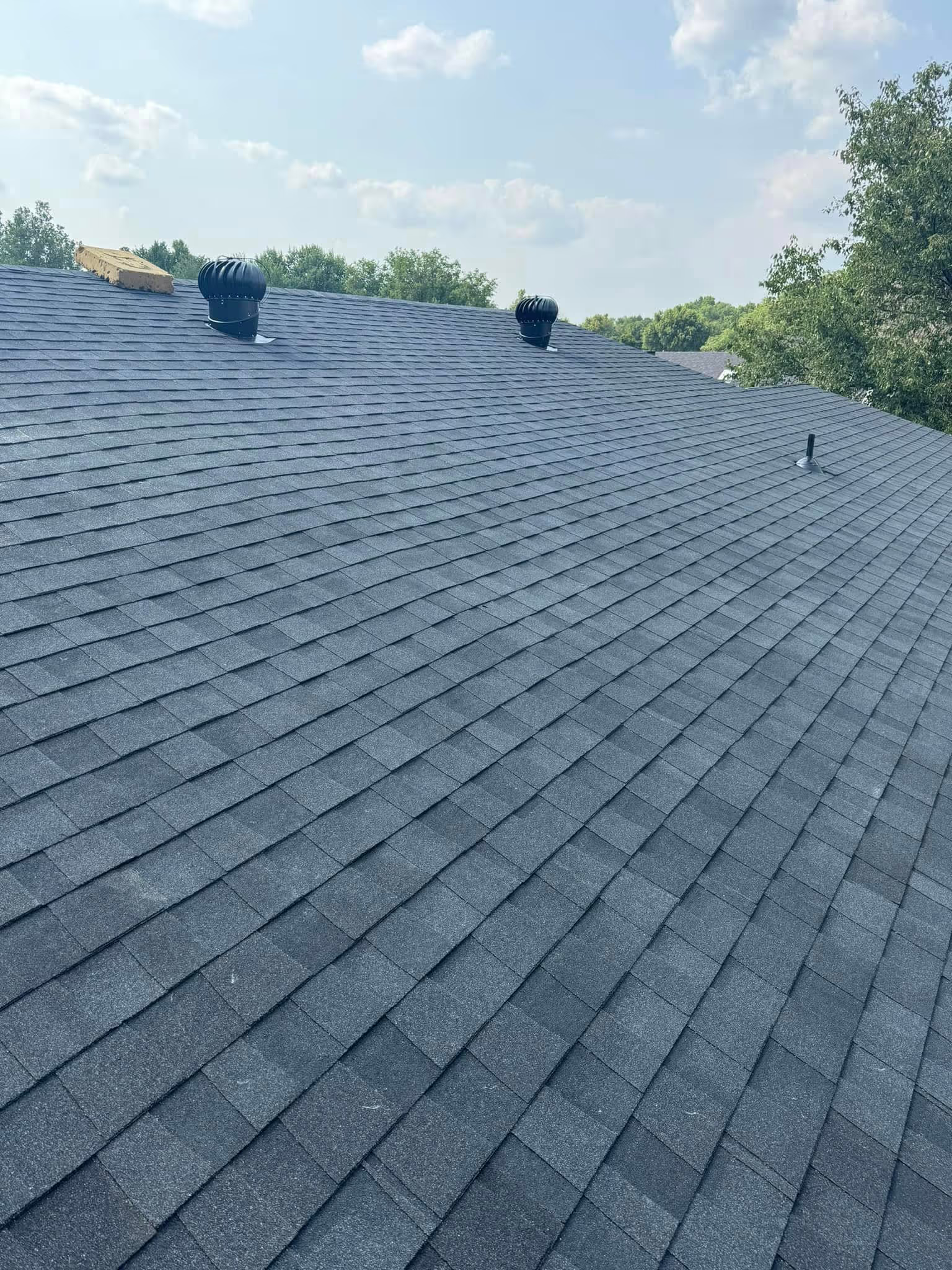
TL;DR: Most common roof leaks in Oklahoma City start at the roof’s weak points, not in the middle of the shingles: cracked pipe boots, failed flashing, backed-out nails, wind-creased tabs, hail bruising and storm limbs. Find the cause before you patch, because a leak fixed at the stain usually comes back.
Common roof leaks in Oklahoma City tend to trace back to the same short list of causes, and most of them sit at the edges and openings of the roof rather than in the open field of shingles. Water shows up on a ceiling several feet from where it got in, so the stain rarely tells you the source. This guide walks through what usually fails on metro roofs, why our climate speeds it up, and how to narrow down the source before anyone starts patching. If you already know you need help, our residential roof repair service covers everything below.
Why Is My Roof Leaking? The Short Answer
Your roof is leaking because water found a gap in one of the places where the shingle surface is interrupted or fastened. On a typical OKC home, that means a plumbing vent, a wall or chimney, a nail, a valley or the roof edge. Pipe boots and flashing usually leak before the field shingles fail, which is why a roof that looks fine from the street can still drip into the attic.
The second answer is storm damage. Hail and wind can break the shingle itself, and Oklahoma gets plenty of both. In practice, the metro’s hail season runs from March through October, and ice storms add a winter risk on top of that.
Common Roof Leaks in Oklahoma City and What Causes Them
These are the most common repairs on metro homes. Several can happen at once on an older roof.
Cracked or Split Pipe Boots
Rubber pipe boots are one of the most common leaks on otherwise healthy roofs. The rubber collar that seals around a plumbing vent dries out, cracks and pulls away from the pipe. Water then runs down the pipe and into the attic, often showing up as a stain near a bathroom or kitchen. Replacing the boot fixes it. Smearing sealant around the old one only buys a little time.
Failed Step and Counter Flashing
Flashing at walls and chimneys is the other classic leak point. Step flashing tucks under each shingle course where a roof meets a wall, and counter flashing laps over it from the wall side. When either piece rusts, separates or was never installed right, water gets behind the siding or brick. The right repair replaces the flashing rather than sealing over it.
Nail Pops
A backed-out nail lifts the shingle above it and opens a path for water. The fastener tents the shingle, which becomes both a leak and an uplift point the next time the wind catches it. The fix is to reseat or replace the fastener into sound decking. Caulking over the nail head doesn’t address why it backed out.
Wind-Creased or Missing Shingles
A crease, tear or missing tab is wind damage. A lifted tab alone may not be. When a gust bends a shingle back, it can leave a horizontal crease that cracks the mat, and the seal strip stops holding. Missing tabs expose the nail line and the underlayment. Replacement shingles need hand-sealing, because new tabs may not self-seal in cold weather.
Hail Bruising
Hail can fracture a shingle’s mat without leaving an obvious hole. A bruise shows up as a circular mark with exposed asphalt or a soft spot, and it lets water work through over time. Loose granules alone aren’t proof of hail, since they also shed with normal aging. Metro roofs take several small hail events a year, and research shows repeated small hail wears weathered shingles down more than most owners expect. Our guide on how to spot hail damage on your roof covers what to look for.
Tree Limbs and Ice
Limb strikes punch holes that leak right away. The historic October 2020 ice storm coated the metro in about half an inch of ice, with 1 to 1.5 inches or more in spots, and brought limbs down onto roofs and gutters across the area. Neighborhoods with mature trees also collect leaves in valleys, where water slows down and backs up under the shingles.
Clogged Gutters and Roof Edges
When gutters back up, water climbs under the first course of shingles. That rots the fascia and the edge of the decking, and in winter it can freeze at the eaves and back up further. Drip edge helps here. The 2024 IRC, which Oklahoma adopted effective September 14, 2026, requires it at eaves and rakes.
Heat-Aged Shingles
Oklahoma heat shortens shingle life, especially on south and west slopes. Parts of the state see roughly 60 to 65 days a year at 90°F or hotter, plus dozens of freezing days. UV and poor attic ventilation make shingles curl and crack, and a cracked shingle eventually leaks.
How to Narrow Down the Source of a Leak
You can learn a lot before anyone climbs a ladder. Start in the attic on a dry day with a flashlight, and look for dark stains, damp insulation or daylight around penetrations. Trace any stain uphill along the rafters, since water travels before it drips.
Then match what you find to the likely cause:
- Stain near a vent pipe or bathroom: pipe boot.
- Stain along an exterior wall or near the chimney: step or counter flashing.
- Small drips in a scattered pattern: nail pops or hail bruising.
- Water at the ceiling edge or on the fascia: gutters, drip edge or the first shingle course.
- Leak that started right after a storm: wind, hail or a limb strike.
Take dated photos of everything you find. If water is actively coming in, protect the interior first and get the roof covered. Our post on emergency roof repair options explains what to do in that first stretch.
What This Means for Oklahoma City Homeowners
A leak is worth fixing quickly, because a hidden drip turns a roof problem into a drywall, insulation and decking problem. Searches for roof repair in the metro peak in January and February, the winter leak and ice months, when a small summer failure finally shows up inside.
Permit rules for repairs depend on where you live. Oklahoma City exempts maintenance of 500 square feet or less from its reroof permit, and Edmond doesn’t require a permit for roof coverings at all. Midwest City is the exception: it requires a $50 permit even for repairs. Our Midwest City roof repair page covers the local details.
Insurance matters too. Homeowners policies generally cover sudden storm damage such as hail, wind and falling limbs, but aging and wear are not covered perils. A leak from a cracked pipe boot on an older roof is usually a maintenance repair. A leak that started the night of a hailstorm is worth an inspection before you decide anything, since hail spread across several slopes is often a claim question rather than a patch.
Finally, repair isn’t always the right answer. When granule loss, curling and brittleness run across the whole roof, replacement tabs won’t seal or match, and the next leak is already on its way.
Get a Free Leak Inspection in Oklahoma City
If you’re dealing with any of these common roof leaks in Oklahoma City, we’ll inspect the roof, find the source and document what we find with photos. Prodigy Restoration is BBB Accredited, an Owens Corning Preferred Contractor, and our roof inspections are free. We answer calls 24/7. Call us at (405) 730-5672 or fill out our contact form.
Frequently asked questions
Why is my roof leaking?
Most leaks start where the shingle surface is interrupted or fastened: cracked pipe boots, failed flashing at walls and chimneys, backed-out nails, clogged valleys or gutters, and the roof edge. Storms are the other big cause, since hail can fracture a shingle's mat and wind can crease or tear tabs off. Pipe boots and flashing usually fail before the field shingles do.
How do I find the source of a roof leak?
Start in the attic on a dry day with a flashlight. Look for dark stains, damp insulation or daylight around vent pipes and chimneys, then trace any stain uphill along the rafters, because water travels before it drips. A stain near a vent points to the pipe boot, and one along an exterior wall points to flashing.
Should I repair or replace my roof if it's leaking?
Repair it when the leak comes from one spot, like a pipe boot or a section of flashing, and the rest of the roof still has life left. Replacement makes more sense when granule loss, curling and brittleness run across the whole roof, or when hail damage covers several slopes. An inspection tells you which situation you're in.
What should I do if shingles blew off my roof?
Protect the inside of the house first, then get the exposed area covered before the next rain. Take dated photos of the missing shingles and anything in the yard. Missing or creased tabs are wind damage, which a homeowners policy may cover, so have the roof inspected before you decide whether to file a claim.
Does homeowners insurance cover a roof leak in Oklahoma?
It depends on what caused the leak. Policies generally cover sudden storm damage such as hail, wind and falling limbs, but aging and wear are not covered perils. A cracked pipe boot on an older roof is usually a maintenance repair. A leak that started after a storm is worth an inspection before you decide on a claim.
Prodigy Restoration
7140 NW 112th St, Oklahoma City, OK 73162