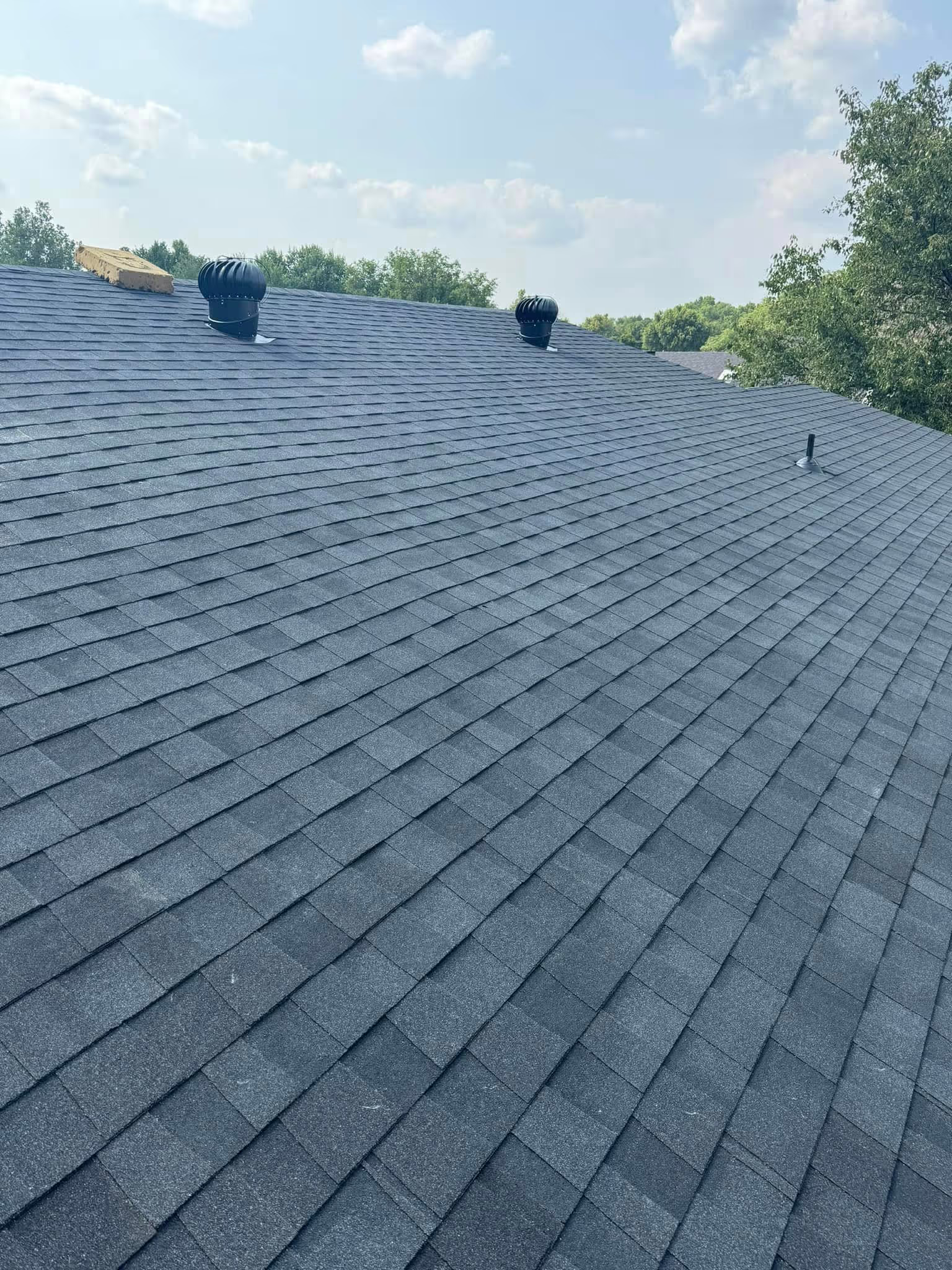
TL;DR: The fastest way to spot hail damage on your roof in Oklahoma City is to check soft metal first. Dented gutters, downspouts, and window screens tell you hail hit the house and from which direction. On the shingles themselves, circular bruises with exposed asphalt, soft spots, and a fractured mat are the signs adjusters and OKC roofers look for.
Why Hail Damage Is Easy to Miss from the Ground
Hail damage on an asphalt shingle roof rarely looks like damage from the driveway. There are often no holes, no missing chunks, and no visible leaks for weeks or months. The actual injury is a bruise, a fractured mat underneath the surface granules, and it can age into a leak if nothing is done about it. Learning how to spot hail damage on a roof in Oklahoma City means knowing what a bruise looks like up close, what the soft metal tells you from the ground, and when the combination is enough to call for an inspection.
Here are the eight signs we check.
8 Signs Your Oklahoma City Roof Has Hail Damage
1. Dark, Circular Bruises on Asphalt Shingles
A hail bruise looks like a slightly darker, slightly sunken circle. On a weathered OKC asphalt shingle, a fresh hail hit shows as a dark spot where the mat underneath has been fractured, and the shingle feels soft or spongy when pressed. Circular impact marks with exposed asphalt, soft spots, or a fractured mat are what adjusters treat as functional damage, so these bruises are the clearest on-roof evidence.
2. Missing Granules in Impact Spots
A hail bruise usually sheds granules. When a hailstone hits a shingle hard enough to fracture the mat, it also knocks granules off the surface at the impact point. Look for round patches where the granules are thinner or missing altogether. Keep in mind that granule loss on its own can be cosmetic or normal aging. It matters most when it shows up as round impact marks after a known storm.
3. Granule Piles at Downspout Exits
Check the ground under your downspouts. After a hail event, granules get knocked off damaged shingles, collect in the gutters, and flush out the downspouts with the next rain. Heavy granule piles at downspout exits, especially on the storm-facing side of the home, are a strong hint of hail impact. Some granule loss is normal on aging shingles; a sudden, heavy pile after a known storm is not.
4. Dented or Damaged Metal Components
Dents in soft metal are the strongest ground-level evidence of hail. Walk the perimeter of the house and look at gutters, downspouts, metal roof vents, turbine caps, and any exposed flashing. Soft-metal dents help establish the storm’s direction and severity. They don’t prove the shingles are damaged on their own, and dent size is not a one-to-one measure of hailstone size, but they tell you the roof deserves a close look.
5. Cracked or Split Shingles
Fresh, random cracks after a storm deserve a second look. Age-related cracking tends to show up across a whole roof as shingles dry out and curl. Hail-related cracking is more random: fracture lines running through granule-loss spots, or shingles split without an obvious age reason. A freshly cracked shingle on a younger roof is worth having an inspector check.
6. Dents in Soft Aluminum (Siding, Screens, Trim)
If your window screens look pitted, hail hit the house. Aluminum screens, soft aluminum siding, and trim are sensitive indicators of hail. They can dent from smaller hailstones than it takes to damage asphalt shingles, so their condition is often the first sign that a storm hit. Take photos from the ground of every dented surface. This documentation is valuable when you file.
7. Shiny Exposed Asphalt Where Granules Used to Be
A shiny spot on a shingle can mean the surface has been broken. When hail strips granules down to the asphalt underneath, the exposed spot reflects sunlight differently and looks shiny or slick against the matte finish around it. Exposed asphalt at a circular impact mark is one of the signs of functional damage, and damage spread across multiple slopes is what usually points toward replacement rather than repair.
8. Damage to Skylights and Roof Vents
Cracked skylight glass, broken vent hoods, or torn pipe boots confirm damage. Skylights and roof penetrations are often the most visible damage from a hailstorm because the materials are more fragile than the shingles themselves. If you can see damage to any rooftop accessory from the ground or an attic window, the shingles around it were likely hit too.
What to Do When You Notice These Signs
If you see any of these signs, especially soft-metal dents plus granule piles at downspouts, do three things, in this order.
First, document everything with photos before anyone else touches the house. Photograph every side of the roof from the ground, every dented gutter or screen, and every granule pile. Save the photos to cloud storage the same day so the dates are preserved. Note the storm date too, since it can be matched to National Weather Service reports.
Second, call a registered, locally based Oklahoma City roofer for a free inspection. Every roofer working in Oklahoma must be registered with the Construction Industries Board, and you can verify that online. Be cautious with door-knockers and out-of-state “storm chaser” crews. A BBB-accredited local company with a real OKC address is what you are looking for. Prodigy Restoration offers free roof inspections across the OKC metro.
Third, if damage is confirmed, file the insurance claim with your carrier promptly and follow our full guide on how to file a roof insurance claim. For significant damage, our storm damage restoration team can document the damage, meet your adjuster on the roof to show it, submit supplements for missed line items, and handle the repair or replacement.
Schedule a Free Hail Damage Roof Inspection in Oklahoma City
Prodigy Restoration offers free hail damage inspections across Oklahoma City, Edmond, Nichols Hills, Yukon, Moore, and the surrounding OKC metro. We are BBB Accredited and an Owens Corning Preferred Contractor, and every inspection includes photo documentation you can keep for your claim. We answer calls 24/7 at (405) 730-5672, or you can fill out our contact form.
Frequently asked questions
Can I spot hail damage on my roof from the ground?
You can spot the ground-level indicators, such as dented gutters and downspouts, pitted aluminum screens, and granule piles at downspout exits, but usually not the shingle damage itself. Most hail bruises are too subtle to see from the ground. If those signs are present, have a registered OKC roofer inspect the roof surface before you file a claim.
How big does hail have to be to damage a roof in Oklahoma?
There's no single cutoff. Hail around 1 inch, the size the National Weather Service treats as severe, is where damage to asphalt shingles commonly starts to show up, and older or weathered shingles can be damaged by smaller stones. Class 4 impact-resistant shingles pass a UL 2218 test with a 2-inch steel ball, but that isn't a guarantee against real hail.
How long after a storm can I file a hail damage claim in Oklahoma?
It depends on your policy, so check it. Many policies require prompt notice of a loss, and Oklahoma allows a policy to limit the time to sue to as little as one year from the loss. Sooner is better: the longer you wait, the harder it is to tie the damage to a specific storm.
Will my insurance company inspect my roof even if I'm not sure I have damage?
Your carrier sends an adjuster once you file a claim. That's why we recommend a free inspection from a local roofer first. If the roofer finds damage, you file with documentation in hand. If not, you avoid a claim that may be denied and still show up on your loss history.
Does hail damage a roof even if there are no leaks?
Yes, and this is the trap many OKC homeowners fall into. Hail often doesn't cause an immediate leak. It fractures the shingle mat under the granules, and leaks can follow later as the damaged shingles break down. By the time leaks appear, your policy's deadlines may have passed, so get an inspection soon after a storm.
Can a roofer tell if hail damage is from one storm or another?
To a degree. An inspector can judge how fresh the damage looks, for example how weathered the bruise edges are and whether granule loss is sharp or softened. Exact storm attribution usually comes from matching the damage to National Weather Service or NOAA storm reports for your area on specific dates.
Prodigy Restoration
7140 NW 112th St, Oklahoma City, OK 73162