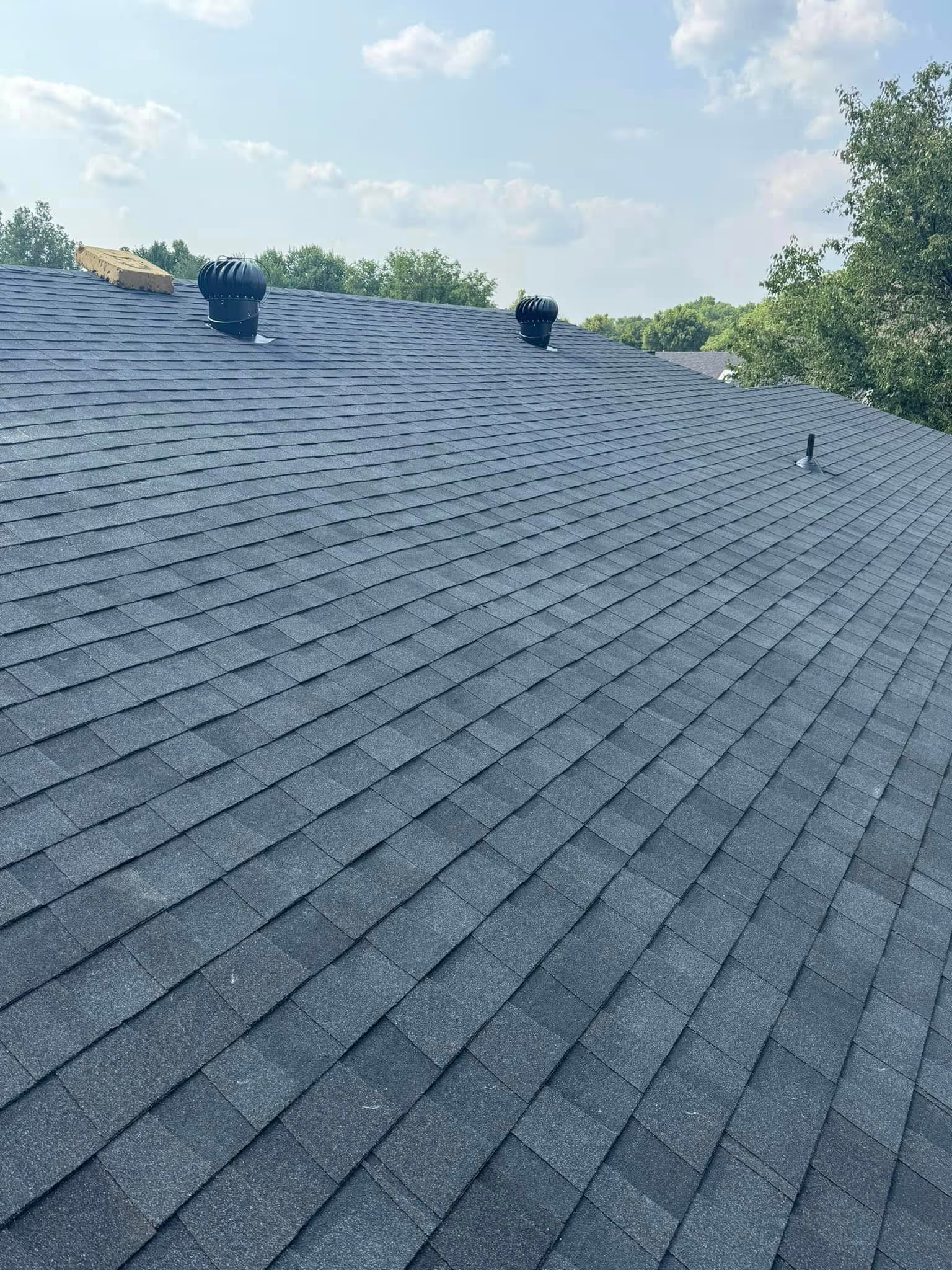
TL;DR: In the TPO vs EPDM Oklahoma City decision, TPO is a white, heat-welded membrane that reflects summer heat, while EPDM is a black rubber membrane with taped or adhered seams that usually costs less up front. Both have similar typical service lives, and for hail, the tested assembly under the membrane matters more than which one you pick.
TPO vs EPDM is the first fork most Oklahoma City building owners hit when a low-slope roof reaches the end of its life. Both are single-ply membranes, both are common on warehouses, offices and retail buildings across the metro, and both can perform well for decades. The differences are in color, seams, repairs and up-front cost. This guide lays them side by side, then explains how Oklahoma heat and hail should shape the choice. For the full range of work we do on low-slope roofs, see our commercial roofing services page.
TPO vs EPDM: How Do the Two Membranes Compare?
The table compares typical installations of each. Real projects vary by thickness, attachment method and the insulation underneath.
| Factor | TPO | EPDM |
|---|---|---|
| Material | Thermoplastic single-ply | Synthetic rubber single-ply |
| Usual color | White, reflective | Black |
| Seams | Heat-welded | Taped or adhered |
| Typical repair | Heat-welded patch | Primed tape or adhered patch |
| Relative installed cost | Moderate | Lower |
| Typical service life | Roughly 20 to 30 years | Roughly 20 to 30 years |
| Summer heat | Reflects sunlight | Absorbs sunlight |
| Hail performance | Depends on the tested assembly | Depends on the tested assembly |
| Best for | Buildings where cooling load and seam strength matter most | Owners who want a lower up-front cost and a flexible, proven membrane |
The service-life ranges come from national budget guides, not a guarantee for any one roof. How long a membrane lasts in practice depends on installation quality, drainage, foot traffic and how quickly damage gets repaired.
How Each Membrane Is Built and Repaired
The way each membrane joins at the seams drives most of the day-to-day differences.
TPO: welded seams and a reflective surface
TPO comes in rolls that are laid out and joined with hot air. The heat fuses the overlapping sheets into one continuous piece, so a well-made seam is as strong as the sheet around it. Repairs work the same way: a crew cleans the area and heat-welds a patch over the damage. TPO is commonly specified in 60 to 80 mil thicknesses for replacement work.
EPDM: rubber sheets joined with tape or adhesive
EPDM is a synthetic rubber that stays flexible across a wide temperature range. Its sheets are joined with seam tape or adhesive, not heat, and repairs use primed tape or adhered patches. EPDM has a long track record on low-slope roofs. As it ages, the seams and flashings are the details to watch during inspections.
How the membrane is attached
Either membrane can be mechanically fastened to the deck, fully adhered to the board below it or, on some roofs, held down with stone ballast. Fully adhered systems glue the sheet across its whole surface, so there are no fastener plates under it for hail to break the membrane against. The attachment method moves the price as much as the membrane does, so compare bids on how the roof is attached, not just on TPO or EPDM.
For both membranes, one rule holds. If water has reached the insulation under a damaged area, the wet insulation must be cut out and replaced, not sealed over with a patch.
How Oklahoma Heat and Hail Affect the Choice
Central Oklahoma puts two different loads on a flat roof: long, hot summers and frequent hail. Each one points in a different direction.
Summer heat and UV
Parts of Oklahoma see roughly 60 to 65 days a year at 90°F or hotter. Under that sun, a black membrane absorbs heat that a white one reflects. IBHS guidance notes that Oklahoma’s summer UV and heat favor reflective white TPO. For a building with a large cooled space right under the roof deck, that reflectivity is a real factor in the choice.
Hail: the assembly matters more than the membrane
Hail is where the membrane name matters least. On TPO, hail tends to fracture the membrane over fastener plates and insulation joints, the hard spots underneath it. That makes the layers below the membrane as important as the membrane itself.
IBHS recommends specifying the whole tested roof assembly rather than just membrane thickness. Its commercial guidance calls for:
- An assembly rated at least FM 4470 Class 1-SH, and a very-severe-hail (VSH) rated assembly where one is available
- A high-density gypsum cover board under the membrane
- A fully adhered attachment, which eliminates the vulnerable fastener plates
That’s why a fully adhered membrane over a cover board is the setup IBHS points to for hail country, whichever membrane goes on top. Ask any bidder which tested assembly they are proposing, not just which membrane.
Is a Recover an Option, or Does the Old Roof Come Off?
Before choosing a new membrane, find out what’s under the old one. A moisture survey (infrared, nuclear or impedance, confirmed by core cuts) shows whether the insulation is dry. We run moisture surveys and core cuts on commercial roofs before recommending repair, recover or replacement.
That survey decides a lot. A recover, meaning a new membrane over the existing roof, avoids a full tear-off and costs less. The building code doesn’t allow it everywhere, though. A recover is prohibited when the existing roof is water-soaked or deteriorated, or when two or more roof coverings are already in place. In those cases, the old roof comes off first. Our commercial roof retrofitting page covers the recover and restoration routes in more detail.
Where a recover is allowed, IBHS notes that frequent hail favors cover-board recovers over thin coatings on aging membranes.
How to Decide on TPO vs EPDM for an Oklahoma City Building
Start with the building, not the brochure. A few questions narrow the choice quickly:
- How much does the space under the roof cost to cool? Large conditioned spaces gain the most from a reflective white surface.
- What is the budget and the hold period? EPDM usually costs less up front. If you plan to hold the building for decades, compare the full assembly and the expected maintenance, not just the first price.
- How much foot traffic and rooftop equipment is there? HVAC units, curbs and frequent service visits mean more seams and flashings to maintain on either membrane.
- What hail rating can the assembly reach? Ask for the FM 4470 rating of the proposed assembly, the cover board and the attachment method in writing.
- Can the work fit around operations? We schedule commercial jobs after hours or in phases when a building has to stay open.
Then check the contractor. In Oklahoma, commercial roofing requires a separate Construction Industries Board commercial endorsement on top of the standard roofing registration, with its own exam and a higher liability insurance minimum. Prodigy holds the CIB commercial roofing endorsement, and we show our registration on request.
After installation, either membrane lasts longer with regular attention. We offer maintenance programs for commercial roofs, and our facility manager’s guide to commercial roofing covers what to ask any contractor before signing.
Talk to a Commercial Roofer About TPO vs EPDM in Oklahoma City
The right answer to TPO vs EPDM for your Oklahoma City building starts with a look at the roof you have now and what’s underneath it. Prodigy Restoration is BBB Accredited, holds the CIB commercial roofing endorsement, and answers calls 24/7. Call us at (405) 730-5672 or fill out our contact form.
Frequently asked questions
TPO vs EPDM: which is better?
Neither is better for every building. TPO is a white, heat-welded membrane that reflects summer heat, which helps buildings with large cooled spaces. EPDM is a black rubber membrane with taped or adhered seams that usually costs less up front. Both have similar typical service lives, so the building, budget and tested assembly decide the choice.
Which commercial roof membrane holds up better to Oklahoma hail?
The assembly matters more than the membrane. IBHS recommends an assembly rated at least FM 4470 Class 1-SH, a very-severe-hail rated assembly where available, a high-density gypsum cover board, and full adhesion to eliminate fastener plates. On TPO, hail tends to fracture the membrane over fastener plates and insulation joints.
Is a white TPO roof worth it in Oklahoma's heat?
It often is for buildings with a large conditioned space under the roof. Parts of Oklahoma see roughly 60 to 65 days a year at 90°F or hotter, and a white membrane reflects sunlight that a black one absorbs. IBHS guidance notes that Oklahoma's summer UV and heat favor reflective white TPO.
Can a new membrane go over my existing commercial roof?
Sometimes. A recover is prohibited when the existing roof is water-soaked or deteriorated, or when two or more roof coverings are already in place. A moisture survey using infrared, nuclear or impedance testing, confirmed by core cuts, shows whether the insulation is dry enough for a recover to be considered.
How are TPO and EPDM roofs repaired?
TPO is repaired by cleaning the area and heat-welding a patch over the damage. EPDM is repaired with primed tape or adhered patches. On either membrane, any wet insulation under the damaged area must be cut out and replaced rather than sealed over, or the moisture keeps damaging the roof from below.
Prodigy Restoration
7140 NW 112th St, Oklahoma City, OK 73162