TL;DR: Good Oklahoma City roof repair services for commercial buildings start with finding hidden moisture, not just patching the leak you can see. Wet insulation has to come out, seams and drains need regular checks, and storm damage needs documentation tied to the date of the storm. Your policy, not your roofer, decides what insurance covers.
Oklahoma City roof repair services matter most on the flat roof of a commercial building in the 405, because that roof is the first line of defense for your inventory, your electronics and your operations. In Central Oklahoma, the weather doesn’t just pass through. When a high-wind event or a summer hail core crosses the metro, the difference between a minor maintenance check and a warehouse shutdown often comes down to the quality of your last repair.
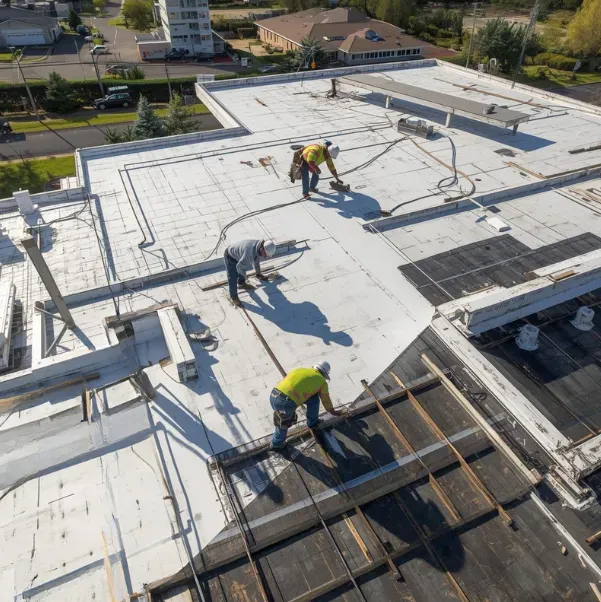
Finding reliable repair help is not about the lowest bid. It is about a contractor who understands how TPO moves with heat and what ponding water does to a low-slope roof. At Prodigy Restoration, we approach commercial repair by looking for the cause, not only the symptom. Commercial roofs face stressors residential roofs rarely see, from HVAC foot traffic to heavy rooftop equipment. Our commercial roof repair page explains the service; this guide explains the thinking behind it.
Evaluating the Integrity of Your Commercial Membrane
When you begin evaluating Oklahoma City roof repair services, the first step is a close look at the membrane itself. Whether you have TPO (thermoplastic polyolefin), EPDM (ethylene propylene diene monomer) or modified bitumen, the membrane acts as one continuous shield. Oklahoma’s sharp temperature swings and hot summers work that shield hard, and seam failures are often invisible from the ground.
A moisture survey finds water trapped beneath the surface. Infrared, nuclear or impedance scanning points to wet areas, and core cuts confirm them. If water is trapped in your insulation, it can corrode a steel deck or rot a wood one from the inside out. A patch on the surface is useless if the layers below are wet. Wet insulation under a repair area has to be cut out and replaced, not sealed over.
The Strategic Advantage of Class 4 Impact Resistant Materials

Oklahoma recorded 216 major hail events of one inch or larger in 2025, eighth in the nation, so impact resistance is a financial question as much as a technical one. Class 4 impact-resistant shingles are usually discussed for homes, but they matter for steep-slope commercial buildings too, such as churches, retail centers and office parks.
Upgrading to Class 4 materials during a repair or partial replacement can pay back through lower premiums. The Oklahoma Insurance Department says many companies give a 25% discount for Class 4 shingles. Discounts are carrier-specific and may apply only to the wind and hail portion of the premium, so ask your carrier before you choose the upgrade for that reason.
Why Material Gauge Matters
For flat roofs, membrane thickness is one defense, and thicker TPO in the 60 to 80 mil range resists punctures better than thinner sheets. Thickness alone isn’t the whole answer, though. Hail on TPO tends to fracture the membrane over fastener plates and insulation joints. The Insurance Institute for Business & Home Safety recommends specifying a tested assembly rated at least FM 4470 Class 1-SH, with a high-density gypsum cover board and a fully adhered attachment that removes those weak points.
Enhancing Longevity with Advanced Roof Ventilation Solutions
A common pain point for facility managers is the slow damage caused by heat and moisture buildup. Where a commercial building has an attic or plenum space under the roof, roof ventilation solutions help manage its temperature and humidity. Without airflow, heat builds under the roof and moisture from inside the building can condense on cold surfaces.
That condensation leads to mold, rusted fasteners and wet insulation. Balancing intake and exhaust, or controlling moisture at its source, keeps the assembly drier. A drier roof is more stable and less prone to the blistering seen on many aging OKC properties.
Navigating the Complexity of Storm Damage Restoration
Oklahoma City sees frequent severe storms, and for a commercial property, recovery depends on documentation. Commercial claims differ from residential ones because the policies are more complex and the stakes are higher.
Our job is to show the adjuster what happened. We inspect the roof, run a moisture survey, photograph the damage, and tie it to the storm date in National Weather Service records. Then we meet the carrier’s adjuster on the roof and prepare an itemized scope, so functional damage that a quick walk-through might miss is on the record. You file and own the claim. Oklahoma law bars a roofer from negotiating the settlement or representing the policyholder, so coverage decisions stay between you and your carrier. Our commercial storm damage restoration page walks through the process.
The Hidden Trap of “Cosmetic” Waivers
Some commercial policies carry cosmetic-damage endorsements that exclude hail dents in metal roofing that don’t affect function. Read your policy for this language before you file. A dent can still hide real damage, such as a cracked seam or a fractured membrane over a fastener plate, and we document that damage when we find it. If your carrier and you disagree about coverage, a licensed public adjuster or coverage counsel is the right help.
Proactive Maintenance: The “Seam and Scupper” Audit
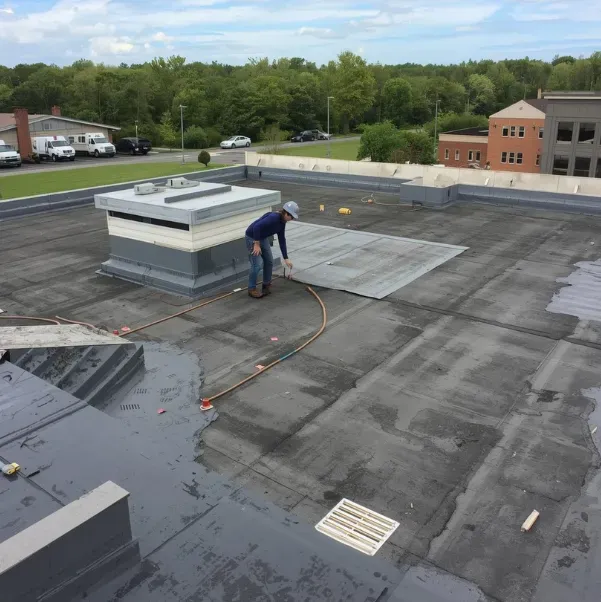
The most expensive repair is the one a short maintenance check could have prevented. In the 405, wind carries dust and debris that can clog scuppers and internal drains quickly. When water ponds on a flat roof, it adds weight the structure has to carry and finds every weak seam.
A seam and scupper audit clears drainage pathways, checks aging flashing around HVAC units, and looks for early signs of bridging, where the membrane pulls away from the parapet wall. Catching these issues early extends the life of your roof and prevents the emergency calls that always seem to come at 2:00 AM on a Sunday.
Checklist for OKC Facility Managers:
- Clear Debris: Ensure leaves and dirt aren’t blocking scuppers.
- Check Seams: Look for lifting or cracking in the membrane welds.
- Monitor HVAC Curbs: Inspect the caulking and flashing around rooftop units.
- Inspect After Hail: Membrane fractures may not leak right away, so inspect after every significant storm.
Minimizing Operational Downtime During Repairs
For a business, the biggest cost of a roof repair is often the disruption, not the invoice. A project that blocks loading docks or creates a hazard for customers can cost more than the repair itself.
Plan staging, material delivery and work hours around your peak operations before the job starts. Ask your contractor how the work will be phased, where materials will sit, and how the building stays secure while the roof is open. Those answers tell you more about a commercial roofer than the bid total.
The TPO vs. EPDM Debate in Central Oklahoma
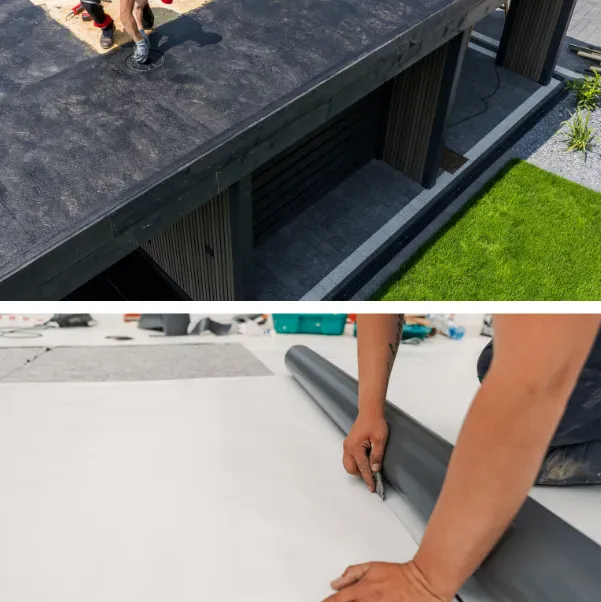
When considering Oklahoma City roof repair services, many property owners ask about material life. Black EPDM rubber is a proven material known for its flexibility. Oklahoma’s summer UV and heat, however, favor reflective white TPO and silicone, according to IBHS guidance.
The two also repair differently. TPO seams and patches are heat-welded, which takes specialized equipment and trained hands. EPDM repairs use primed tape or adhered patches. Modified bitumen takes torch or cold-applied patches. The right choice depends on the roof you have and how much life it has left.
Securing Your Asset for the Next Supercell
Your commercial roof protects your equipment, your inventory and your staff. Don’t leave it to a storm-chaser crew that may not be here next season. Every roofer in Oklahoma must register with the Construction Industries Board, and commercial work requires a separate commercial endorsement, so ask to see both. Prodigy Restoration has a permanent office in northwest Oklahoma City, and we understand the codes and weather of Central Oklahoma.
Protect Your Property Today
Roof repair works best when it starts with a clear picture of what is under the membrane. Prodigy Restoration is a BBB Accredited Oklahoma City roofer that answers calls 24/7 and offers free commercial roof inspections. Call us at (405) 730-5672 or fill out our contact form.
Frequently asked questions
Why does a commercial roof need a moisture survey before a repair?
Water trapped in the insulation can corrode or rot the deck and makes a surface patch useless. A moisture survey with infrared, nuclear or impedance scanning, confirmed by core cuts, shows where the roof is wet. Wet insulation has to be cut out and replaced, not sealed over.
Is a thicker TPO membrane enough to resist hail?
Thicker TPO resists punctures better, but the whole assembly matters more. Hail tends to fracture TPO over fastener plates and insulation joints. IBHS recommends a tested assembly rated at least FM 4470 Class 1-SH, with a gypsum cover board and a fully adhered attachment.
Will my insurer discount a Class 4 roof?
Possibly. The Oklahoma Insurance Department says many companies give a 25% discount for Class 4 shingles, but discounts are carrier-specific and may apply only to the wind and hail portion. Ask your carrier before you upgrade for that reason.
What if my adjuster calls hail dents cosmetic?
Some commercial policies exclude cosmetic dents in metal roofing, so read your policy language first. We document any functional damage we find, like cracked seams or fractured membrane. If you and your carrier disagree about coverage, talk to a licensed public adjuster or coverage counsel.
How often should a flat roof be checked in Oklahoma City?
Check drains and scuppers regularly, since wind-blown debris can clog them, and inspect after every significant hailstorm. Membrane fractures from hail may not leak right away, so a roof that looks fine after a storm can still be damaged.
Prodigy Restoration
7140 NW 112th St, Oklahoma City, OK 73162