TL;DR: Emergency commercial roofing services in Oklahoma City start with containment: find the breach, secure it against wind and rain, and stop water from spreading through the insulation. Then comes a moisture survey, documentation tied to the storm date, and a permanent repair or replacement. Your policy decides what the claim pays, and code upgrades are covered only where it includes ordinance or law coverage.
The middle of a Tuesday night is usually when the unthinkable happens for a facility manager, and it is when emergency commercial roofing services in Oklahoma City earn their keep. While the rest of the 405 is asleep, a microburst or a clogged drain turns your warehouse floor into a shallow pond. Water doesn’t just drip. It migrates through commercial insulation, reaches inventory and equipment, and creates liability fast. When you search for help at that hour, you need a contractor who understands triage and knows how to keep your business running.
At Prodigy Restoration, we answer calls 24/7, because a delay lets a small breach turn into an interior restoration project. The commercial setting raises the stakes: every gallon that gets inside is lost product, lost hours and a risk to the structure. This guide explains what a real emergency response looks like in Central Oklahoma, from the first call to the permanent fix. Our commercial storm damage restoration page describes the service.
Defining a True Commercial Roofing Emergency
Not every leak is an emergency, but every emergency starts with a leak. For a business, an emergency is an operational threat. If water is entering a server room, a retail showroom or a manufacturing floor with powered equipment, the risk of electrical hazards and equipment loss is immediate. Emergency response starts with triage and containment.
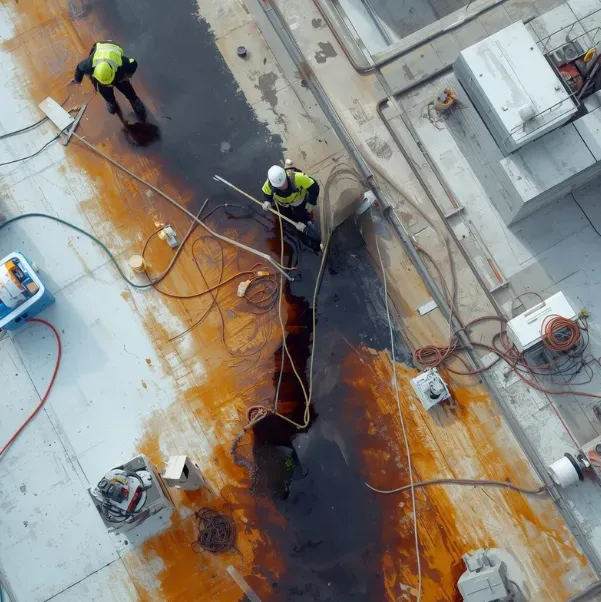
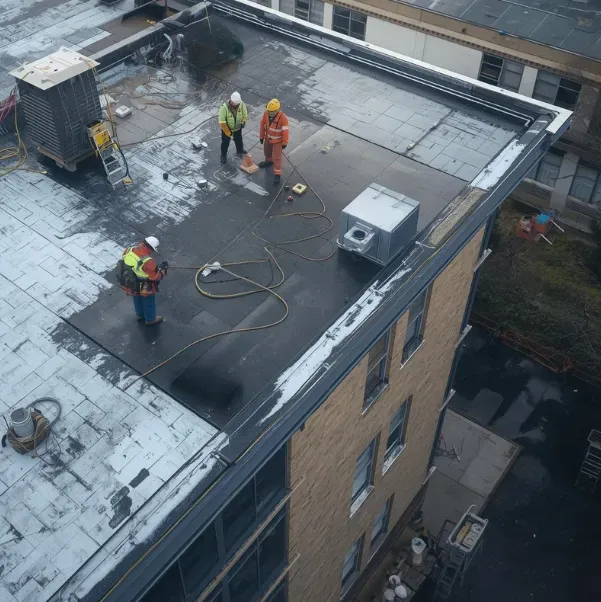
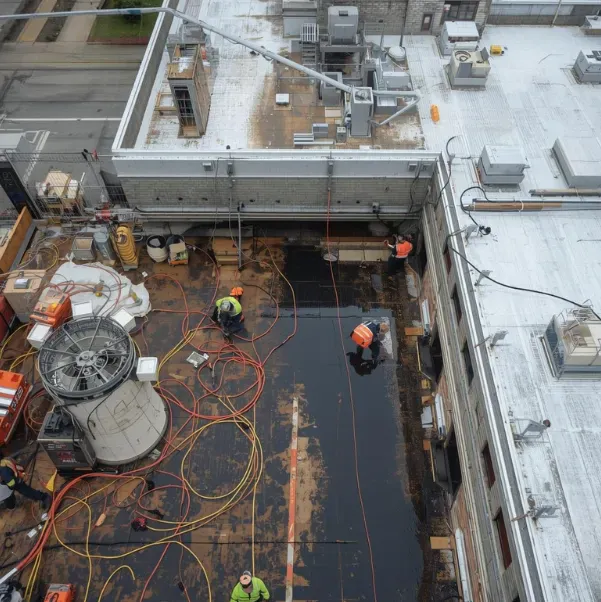
A true emergency response isn’t about the final fix. It is about stopping the water. The first step is finding the source of the breach, whether a TPO membrane punctured by storm debris or a clogged scupper backing water over the flashing. The second is a temporary measure, such as a secured tarp or a temporary patch, that keeps the building operating until the permanent repair.
Why Speed and Precision Matter in the Oklahoma Climate
Oklahoma storms often come in waves, and the storm that breaks your roof may be followed by more rain. If the first response doesn’t secure the building, the damage compounds. Water that reaches the insulation stays there, and wet insulation can corrode a steel deck or rot a wood one from the inside out.
Wind is the other enemy. On March 14, 2025, gusts of about 85 mph hit Oklahoma and Cleveland counties and damaged roofs across the area. A temporary patch that isn’t fastened or weighted correctly becomes debris in the next gust. Emergency protection on a flat roof has to be secured at the edges and held down so it stays put until the weather allows a long-term repair.
The Strategic Advantage of Class 4 Impact Resistant Materials
When the emergency is over, the conversation turns to preventing the next one. Oklahoma recorded 216 major hail events of one inch or larger in 2025, eighth in the nation. That makes the choice of materials during restoration a financial decision, not only a technical one.
Turning Restoration into an Insurance Asset
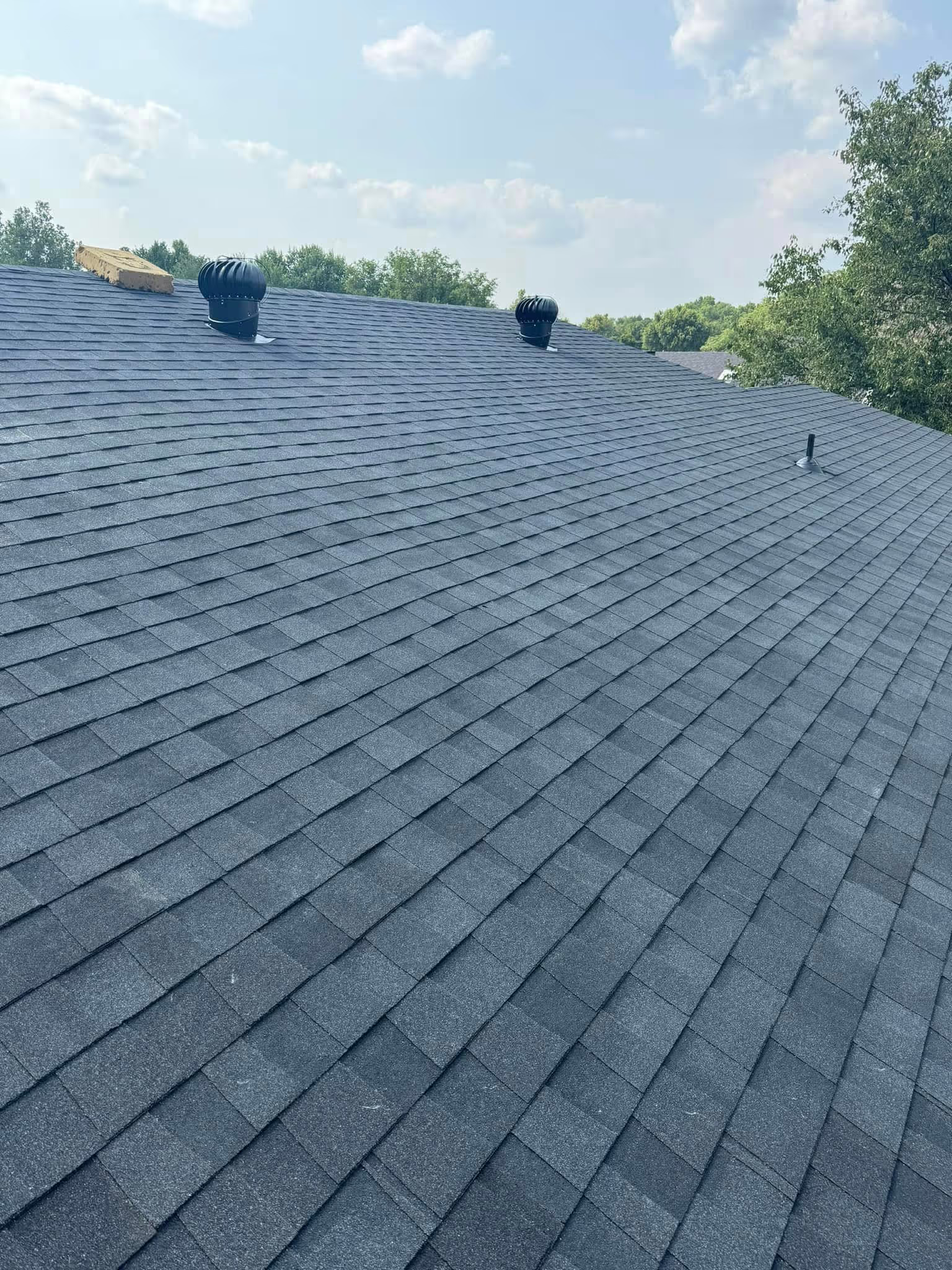
Many commercial buildings have steep-slope sections, such as office fronts or church roofs, where shingles make sense. The Oklahoma Insurance Department says many companies give a 25% discount for Class 4 shingles. Discounts are carrier-specific and may apply only to the wind and hail portion, and commercial policies have their own rules, so ask your carrier what qualifies before you upgrade.
Engineering Resilience for the 405
Class 4 isn’t just a label. It is the top rating in the UL 2218 impact test. Many Class 4 shingles use SBS polymers, or rubberized asphalt, to stay flexible so they resist fracturing when hail hits. On the low-slope sections, the Insurance Institute for Business & Home Safety recommends a tested assembly rated at least FM 4470 Class 1-SH, with a high-density gypsum cover board and a fully adhered attachment.
Preventing the Silent Failure: Roof Ventilation Solutions
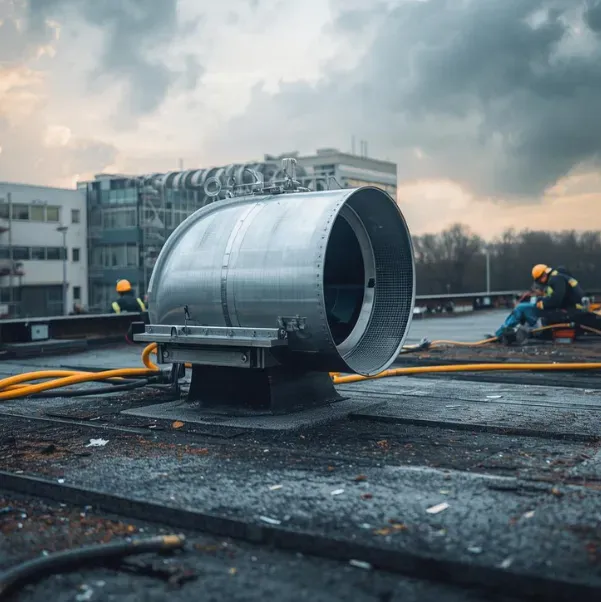
Moisture that stays in a building after a leak does slow damage. If a roof is sealed after a leak without drying the attic or plenum space below it, the trapped moisture feeds mold and rot. Where a building has that space, ventilation belongs in the conversation even during an emergency repair.
Thermal Management in a Crisis
Heat and moisture both age roofing materials faster during an Oklahoma summer. A membrane that has lost adhesion can billow in high winds and eventually tear loose. After an emergency, check that existing vents aren’t blocked by debris or collapsed insulation and that the membrane is still attached.
The Lifecycle Extension
Balanced ventilation keeps the space under the roof drier and closer to outdoor temperature, which helps preserve the materials above it. Flushing out hot, stagnant air helps a new repair or replacement avoid premature blistering. That attention to the whole assembly is what separates a restoration from a band-aid.
Navigating the Forensic Side of Storm Damage Restoration
For many business owners, the emergency is only half the job. The other half is the insurance claim. Commercial storm damage restoration depends on evidence: you need a contractor who shows why the damage is functional, not one who just says “it’s damaged.”
Documentation as a Defensive Weapon
A moisture survey maps where water has traveled. Infrared, nuclear or impedance scanning points to wet areas, and core cuts confirm them. We photograph the damage, tie it to the storm date in National Weather Service records, and meet your carrier’s adjuster on the roof to show what we found. The scope we prepare covers everything from wet insulation to failed flashing around HVAC units. You file and own the claim, and Oklahoma law bars a roofer from negotiating the settlement.
Code Upgrades and Your Policy
Older commercial roofs often don’t meet current code. Code-required items are paid only where your policy includes ordinance or law coverage, so check for it before the restoration is scoped. Supplements for items in our estimate cite the specific scope item and code reference with photos. If your carrier disputes coverage, a licensed public adjuster or coverage counsel is the right help.
The Logistics of a “Stealth” Commercial Installation
An emergency doesn’t mean your business has to stop. A roofing project that blocks loading docks or creates noise for your customers adds to the cost of the storm.
Plan staging, debris removal and delivery times around your operations before the permanent work starts. Ask your contractor how the job will be phased, how parking and entrances stay clear, and how the building stays secure while the roof is open. A good emergency response should solve problems, not create new ones.
Why Local Accountability is the Ultimate Safety Net
After a major Oklahoma City storm, out-of-state storm chasers arrive quickly. Oklahoma requires every roofer to register with the Construction Industries Board, including out-of-state crews, and commercial work requires a separate commercial endorsement. A News 9 investigation found enforcement is thin, so verify the registration yourself. If an emergency repair fails months later, you need a contractor who will answer the phone and stand behind the work.
Prodigy Restoration has a permanent office in northwest Oklahoma City and answers calls 24/7. Our commercial roofing services page lists everything we do for business owners.
Securing Your Property Before the Next Siren
An emergency tests your building’s resilience and your contractor’s competence. You can’t control when a supercell reaches your facility, but you can control the plan you have for the aftermath. Choosing emergency help that brings technical depth, clear documentation and durable materials turns a crisis into a long-term improvement.
Protect Your Property Today
Emergency commercial roofing services in Oklahoma City work best when you know your roof before the storm. Prodigy Restoration is a BBB Accredited Oklahoma City roofer that answers calls 24/7 and offers free commercial roof inspections. Call us at (405) 730-5672 or fill out our contact form.
Frequently asked questions
What counts as a commercial roofing emergency?
Any leak that threatens operations or safety, such as water entering a server room, a showroom or a floor with powered equipment. The first job is containment: find the breach and secure a temporary measure so the building can keep operating until the permanent repair.
Do you answer emergency calls after hours?
Yes. Prodigy Restoration answers calls 24/7, so a leak at night reaches a person who can start the response.
Why does a commercial roof need a moisture survey after a leak?
Water spreads through insulation well beyond the visible leak. A moisture survey with infrared, nuclear or impedance scanning, confirmed by core cuts, maps the wet areas. Wet insulation has to be cut out and replaced, or it can corrode or rot the deck.
Will insurance pay for code upgrades after a storm?
Only if your policy includes ordinance or law coverage. Check for it before the restoration is scoped. If your carrier disputes coverage, a licensed public adjuster or coverage counsel is the right help, since a roofer can't negotiate your settlement.
How do I know an emergency roofer is legitimate?
Every roofer in Oklahoma must register with the Construction Industries Board, including out-of-state crews, and commercial work requires a separate commercial endorsement. Ask for the registration number and verify it before you sign anything.
Prodigy Restoration
7140 NW 112th St, Oklahoma City, OK 73162