TL;DR: For most OKC commercial buildings, white TPO balances heat reflection and welded-seam wind resistance, standing seam metal offers the longest service life, and modified bitumen handles heavy rooftop traffic. Whatever you choose, specify a tested hail-resistant assembly, keep the building ventilated, and verify the roofer’s commercial endorsement before you sign.
A commercial roof in the 405 is not merely a lid on a building; it is an engineered system that must survive a relentless cycle of hail, wind and heat. From the “gorilla hail” of a spring supercell to weeks of 90-degree summer afternoons, the demands placed on Oklahoma City properties are unusually intense. When you begin searching for the best roofing materials for commercial buildings, the decision has to shift from “what is the cheapest upfront” to “what will protect my operations for the next twenty years.”
At Prodigy Restoration, we work on commercial roofs across the Oklahoma City metro, and we know that a roof specified for a milder climate can become a claim waiting to happen here. This guide is designed to cut through the marketing fluff and give facility managers and property owners a practical blueprint for choosing materials that turn a roof from a liability into an asset. For project details, see our commercial roof replacement page.
TPO (Thermoplastic Polyolefin): The Dominant Force in Modern Commercial Roofing
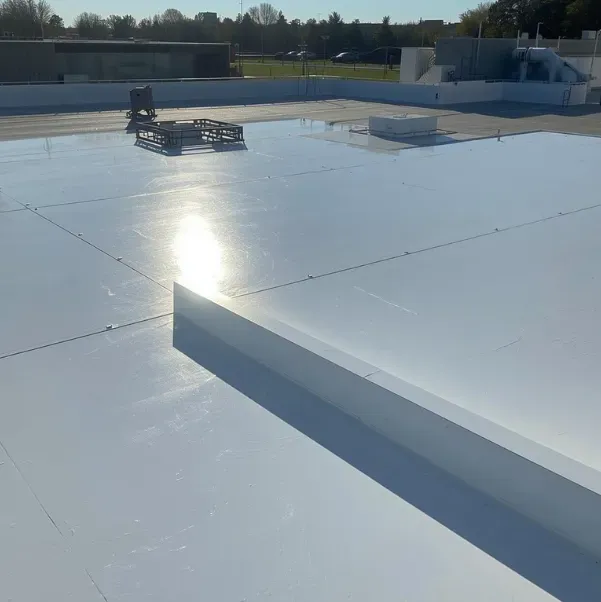
For most modern commercial facilities in Oklahoma City, TPO has earned its place as a common default. TPO is a single-ply, white reflective membrane that addresses two of the main stressors of the Oklahoma climate: intense summer heat and severe wind.
The Thermal Advantage: Reflectivity and Energy Savings
During an Oklahoma summer, a dark roof surface runs far hotter than the air around it. TPO’s bright white surface qualifies it as a “cool roof,” reflecting much of the sun’s energy instead of absorbing it. That reduces the heat load on the building’s HVAC systems, and IBHS guidance notes that Oklahoma’s summer UV and heat favor reflective white TPO. Actual cooling savings depend on the building, its insulation and how it is used.
Heat-Welded Seams: Superior Wind Resistance
In a region where storms like the May 19, 2024 supercell brought 75-mph winds to Oklahoma City, the seams of a roof are a common point of failure. Unlike EPDM, which uses adhesives or tape, TPO seams are heat-welded together with hot-air welding equipment. That fuses the sheets into one continuous, watertight membrane that holds up to the pressure swings of a Central Oklahoma storm.
The weak spot on TPO is hail, not wind. Hail tends to fracture TPO over fastener plates and insulation joints, and those fractures may not leak right away. IBHS recommends a high-density cover board and a fully adhered attachment to eliminate the vulnerable fastener plates.
Metal Roofing: The Ultimate Lifetime Solution for High-End Assets
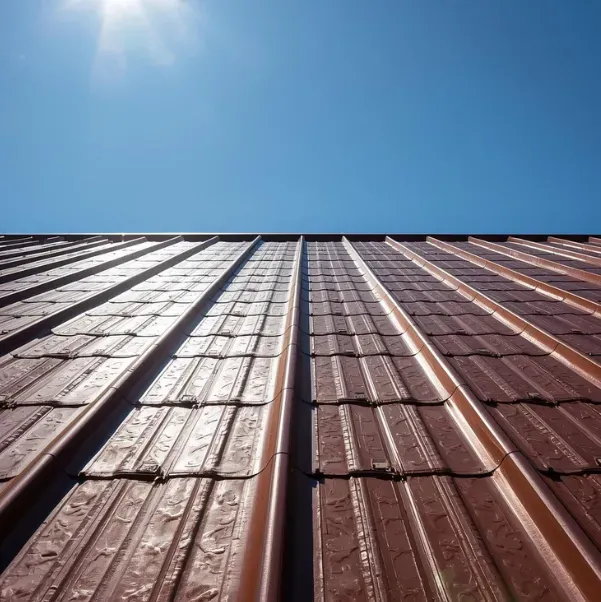
When longevity and storm resilience are the non-negotiable priorities, metal is frequently cited as one of the best roofing materials for commercial buildings. The initial investment is higher than single-ply membranes, but a well-installed standing seam metal roof has the longest service life of the common commercial systems, which can make its lifecycle cost competitive.
Withstanding the Impact of “Gorilla Hail”
Heavier-gauge steel resists hail better than thin single-ply membranes. Extreme hail may leave cosmetic dents, but the panels usually keep shedding water, preventing the interior water damage that shuts down businesses. Read your policy before you count on coverage for those dents: some commercial policies carry cosmetic damage exclusions for metal roofs. For properties that house sensitive electronics, inventory or high-value machinery, that durability provides real peace of mind.
Aerodynamic Engineering and Uplift Protection
Standing seam metal systems use concealed fasteners and interlocking ribs, so there are no exposed screws to back out or rust over time. In the high-wind environment of the 405, that profile lets wind flow over the roof rather than catching the edges and peeling sections away. It is a strong choice for durability in Tornado Alley.
Modified Bitumen: The Multi-Ply Heavyweight for High-Traffic Roofs
Not every commercial roof is a “set it and forget it” environment. If your building requires frequent access for HVAC maintenance, solar arrays or communication equipment, a single-ply membrane like TPO can be vulnerable to punctures. In these cases, modified bitumen stands out among the best roofing materials for commercial buildings.
Puncture Resistance and Redundancy
Modified bitumen (often called “mod-bit”) is a modern evolution of the classic built-up roof. It uses multiple plies of polymer-modified asphalt reinforced with fiberglass or polyester. This creates a thick, redundant barrier that can handle foot traffic and the accidental tool drops that happen during maintenance. If your facility has many rooftop units, the physical “meat” of a mod-bit system provides a safety margin that thinner membranes lack.
Handling Oklahoma’s Thermal Cycles
Oklahoma’s rapid temperature swings, including freezing nights after mild days, can make roofing materials brittle. Parts of the state see 60 or more freezing days a year, according to the Oklahoma Climatological Survey. Modified bitumen is often made with SBS (styrene-butadiene-styrene) polymers, which give the asphalt rubber-like qualities. That lets the roof expand and contract without cracking through freeze-thaw cycles.
The Invisible Engine: Why Roof Ventilation Solutions Matter
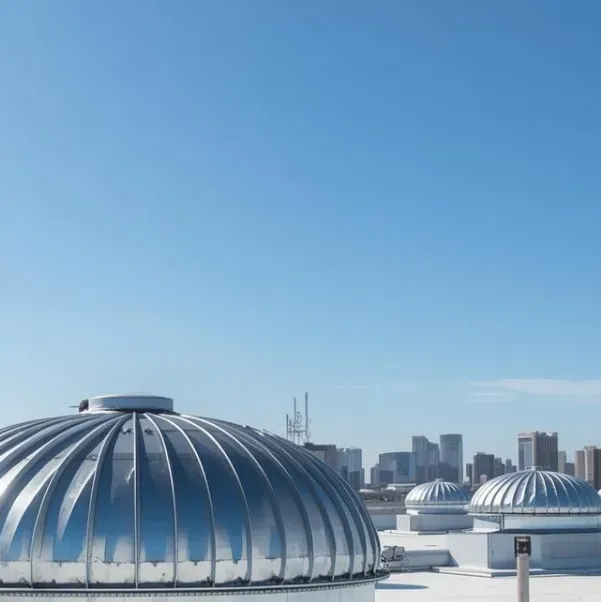
Choosing the right material is only half the battle. One common reason commercial roofs fail early in Oklahoma City is damage from the inside out. Even a good membrane will blister and degrade if moisture and heat are trapped beneath it. This is where roof ventilation solutions become critical.
Preventing Moisture Entrapment and Deck Rot
In large commercial structures, stagnant air traps moisture from industrial processes and occupancy. This moisture condenses on the underside of the roof deck, leading to rusted steel joists or rotting wood decking. Balanced ventilation flushes out this humid air and protects the structural substrate that supports your roofing material.
Managing the Stagnant Attic Heat
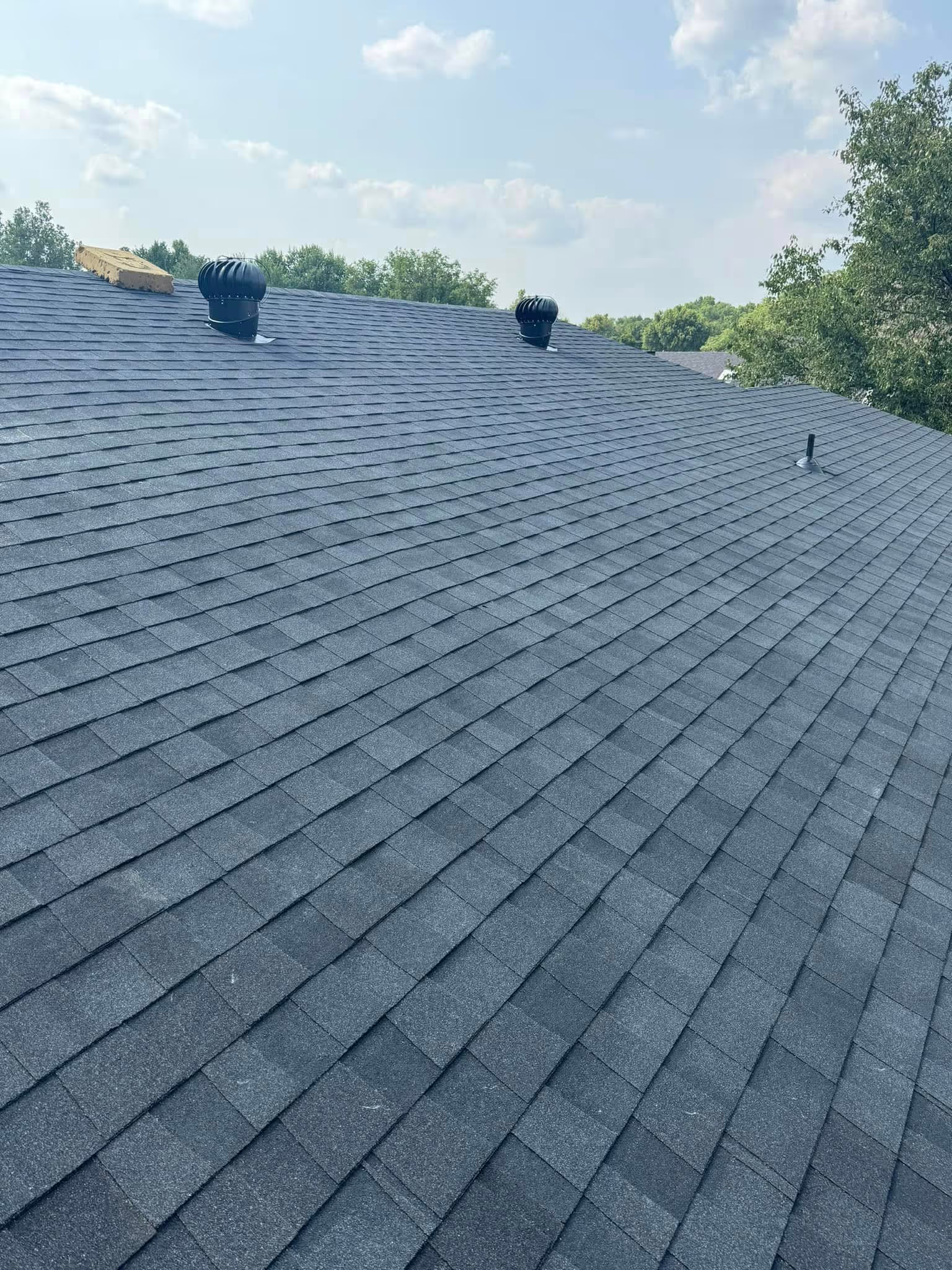
For steep-slope commercial buildings, such as churches or retail strips, proper ventilation lowers attic temperatures. Flushing out the hot air that pools at the peak of the building slows the heat aging of the shingles or metal above it. A well-ventilated roof isn’t just a comfort feature; it helps the roof reach its full service life.
Navigating the Complexity of Storm Damage Restoration
When a major storm hits, the search for the best roofing materials for commercial buildings often turns into an insurance claim. This is where many property owners feel the most pain. Storm damage restoration for commercial assets comes down to documentation and physical evidence.
Forensic Inspection and Documentation
Hail damage on a low-slope roof is not always visible from the surface. A thorough commercial inspection checks seams, flashing, drainage and fastener points, and uses a moisture survey (infrared, nuclear or impedance scanning, confirmed with core cuts) to find wet insulation. Wet insulation must come out; coating over it is the wrong answer. Our team documents the damage with photos and an itemized scope and meets the carrier’s adjuster to show what we found. You own the claim, and a coverage dispute belongs with a licensed public adjuster or coverage counsel. Our free commercial roof inspections page explains the process.
Compliance and Code Upgrades
Building codes change over time. During a storm damage restoration project, the goal is a new roof that meets current requirements, not just a replica of the old one. Code upgrade items are usually paid only where the policy includes Ordinance or Law coverage, so check for it before the project starts.
Class 4 Standards: Turning Your Roof into a Financial Hedge
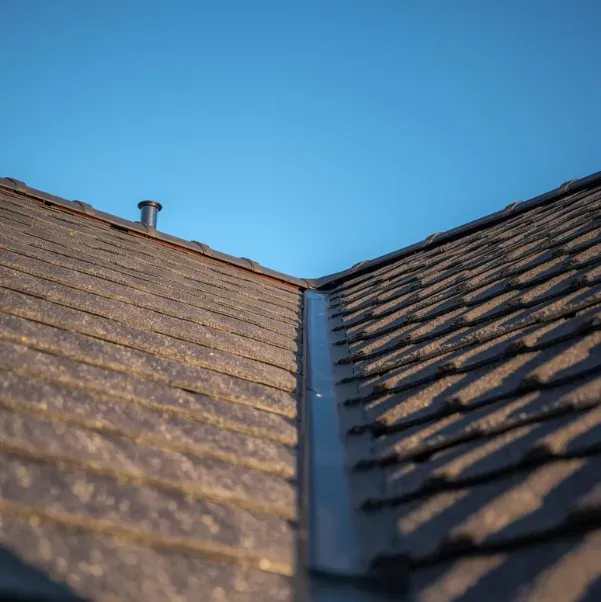
Whether you choose metal, TPO or mod-bit, prioritize an assembly with a tested hail rating. On steep-slope sections, that means Class 4 impact-resistant shingles. On low-slope roofs, IBHS recommends at least an FM 4470 Class 1-SH rating, or a very-severe-hail assembly where one is available. Specify the whole tested assembly, not just the membrane thickness.
Impact resistance can also pay back through insurance. The Oklahoma Insurance Department says many companies discount Class 4 shingles, with 25% a common figure. Credits for commercial membranes vary by carrier, so ask yours what rating earns a discount before you choose a system.
The Prodigy Restoration Standard: Precision Over Speed
A roof is only as good as its weakest seam. At Prodigy Restoration, we don’t just “install roofing”; we build integrated systems. That means following the manufacturer’s high-wind fastening on steep-slope sections, fully welded seams on flat membranes, and synthetic underlayments that hold up to Oklahoma heat.
We are local and accountable. Prodigy was founded in Oklahoma City in November 2022 and works from a permanent office at 7140 NW 112th St. We don’t chase storms across state lines. Before you hire any commercial roofer, confirm they hold the Construction Industries Board’s commercial roofing endorsement, which requires passing an exam and carrying higher liability coverage than residential work.
Protect Your Asset Before the Next Storm Cycles In
The Oklahoma sky doesn’t offer many second chances. A “good deal” on a sub-par commercial roof is a debt you will eventually pay in repairs and downtime. By choosing the right materials and the right partner, you can turn your roof into a fortress. For older low-slope roofs, our post comparing flat and pitched commercial roofs is a useful next read.
Protect Your Property Today
Prodigy Restoration is BBB Accredited, answers calls 24/7 and offers free commercial roof inspections across the Oklahoma City metro. We’ll help you compare the best roofing materials for commercial buildings against your building’s actual condition. Call us at (405) 730-5672 or fill out our contact form.
Frequently asked questions
What is the best roofing material for a commercial building in Oklahoma City?
It depends on the building. White TPO suits most low-slope roofs because it reflects summer heat and its welded seams resist wind. Standing seam metal offers the longest service life. Modified bitumen is the better fit for roofs with heavy foot traffic and many rooftop units.
How does hail damage a TPO roof?
Hail tends to fracture TPO over fastener plates and insulation joints, and those fractures may not leak right away. A high-density cover board and a fully adhered attachment reduce the risk. After a significant storm, have the roof inspected even if nothing is leaking yet.
What hail rating should a commercial roof have in Oklahoma?
IBHS recommends at least an FM 4470 Class 1-SH rating for low-slope roofs, or a very-severe-hail assembly where one is available. Specify the whole tested assembly rather than just the membrane thickness. Steep-slope sections can use Class 4 impact-resistant shingles.
Will my insurance discount a hail-resistant commercial roof?
Possibly, but it varies by carrier. The Oklahoma Insurance Department says many companies discount Class 4 shingles, with 25% a common figure. Credits for commercial membranes differ, so ask your carrier which rating qualifies before you choose a system.
Can a coating fix a hail-damaged commercial roof?
Not if the insulation underneath is wet. A moisture survey confirmed with core cuts should come first, and wet insulation has to be removed and replaced. Coatings only make sense on a dry, sound roof.
Prodigy Restoration
7140 NW 112th St, Oklahoma City, OK 73162