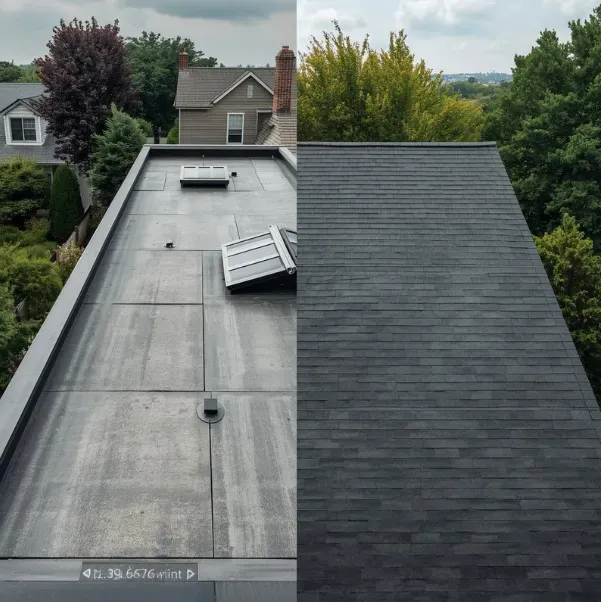
TL;DR: Flat (low-slope) roofs give businesses usable roof space and a lower upfront cost, but they depend on engineered drainage and a hail-rated assembly. Pitched roofs shed water by gravity but catch more wind. For Oklahoma commercial properties, the right choice depends on the building, the drainage plan and how the roof will be maintained.
Choosing between a low-slope system and a traditional pitched roof isn’t just an architectural preference. For a business owner in the 405, it is a calculation of operating cost and storm resilience. Many property managers inherit a structure and simply replace “like for like,” without realizing the wrong geometry can lead to ponding water or wind-uplift problems during a typical Oklahoma spring. When you weigh flat roofing solutions for businesses against traditional steep-slope options, you are deciding how your building will manage energy, drainage and long-term maintenance.
Oklahoma’s volatile weather turns minor installation shortcuts into major structural liabilities. Whether you manage a retail center in Edmond or a warehouse in Moore, your roof is the primary defender of your inventory and your tenants. An informed owner makes better decisions, so this guide breaks down both systems through the lens of local conditions and fiscal common sense. Our commercial roof replacement page explains how we approach a new commercial roof.
The Low-Slope Advantage: Why Businesses Prioritize Flat Roofing Solutions
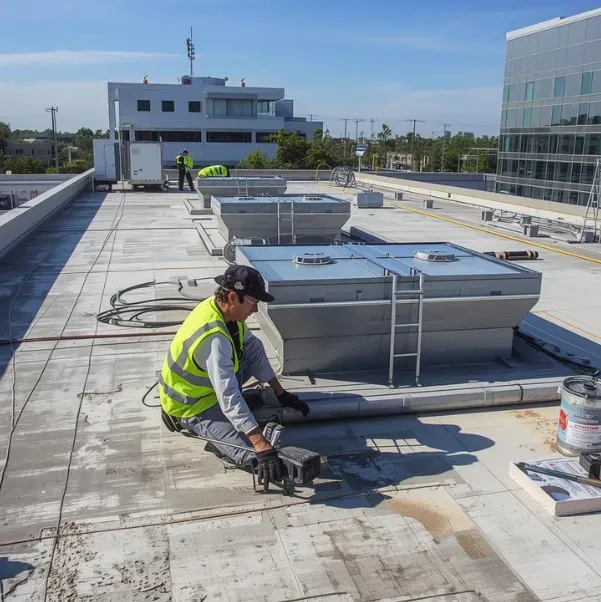
Most commercial structures use a low-slope roof because it makes the most of the building’s footprint. Unlike a pitched roof that creates dead attic space, a flat roof allows for HVAC units, solar arrays and other equipment, keeping those assets accessible for maintenance.
The initial installation cost for a flat system is often lower, because there is less roof surface than a pitched roof covering the same floor area. That saving comes with a commitment to drainage. Oklahoma thunderstorms can drop heavy rain in a short time, and a flat roof without a tapered insulation plan can hold water that stresses the structure.
Traditional Pitched Roofing: When Steep-Slope Makes Sense
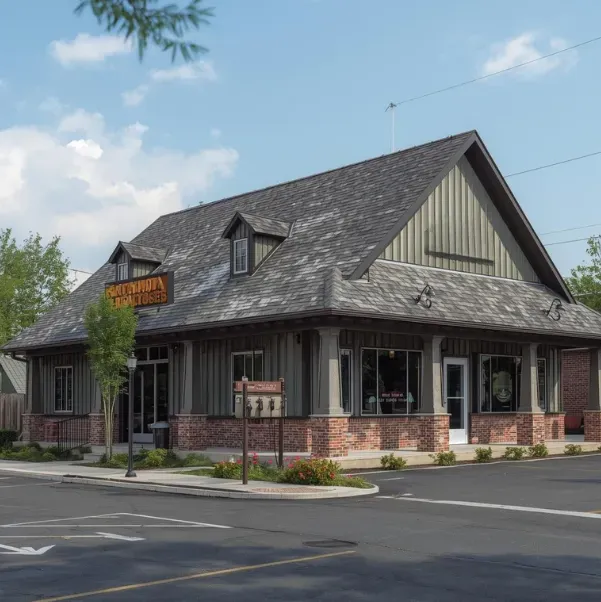
While flat systems dominate the industrial landscape, pitched roofing with asphalt shingles or metal panels remains common on office parks and multifamily buildings. The primary benefit is gravity. A steep-slope roof sheds water, ice and debris on its own, which avoids the ponding that plagues poorly maintained flat roofs.
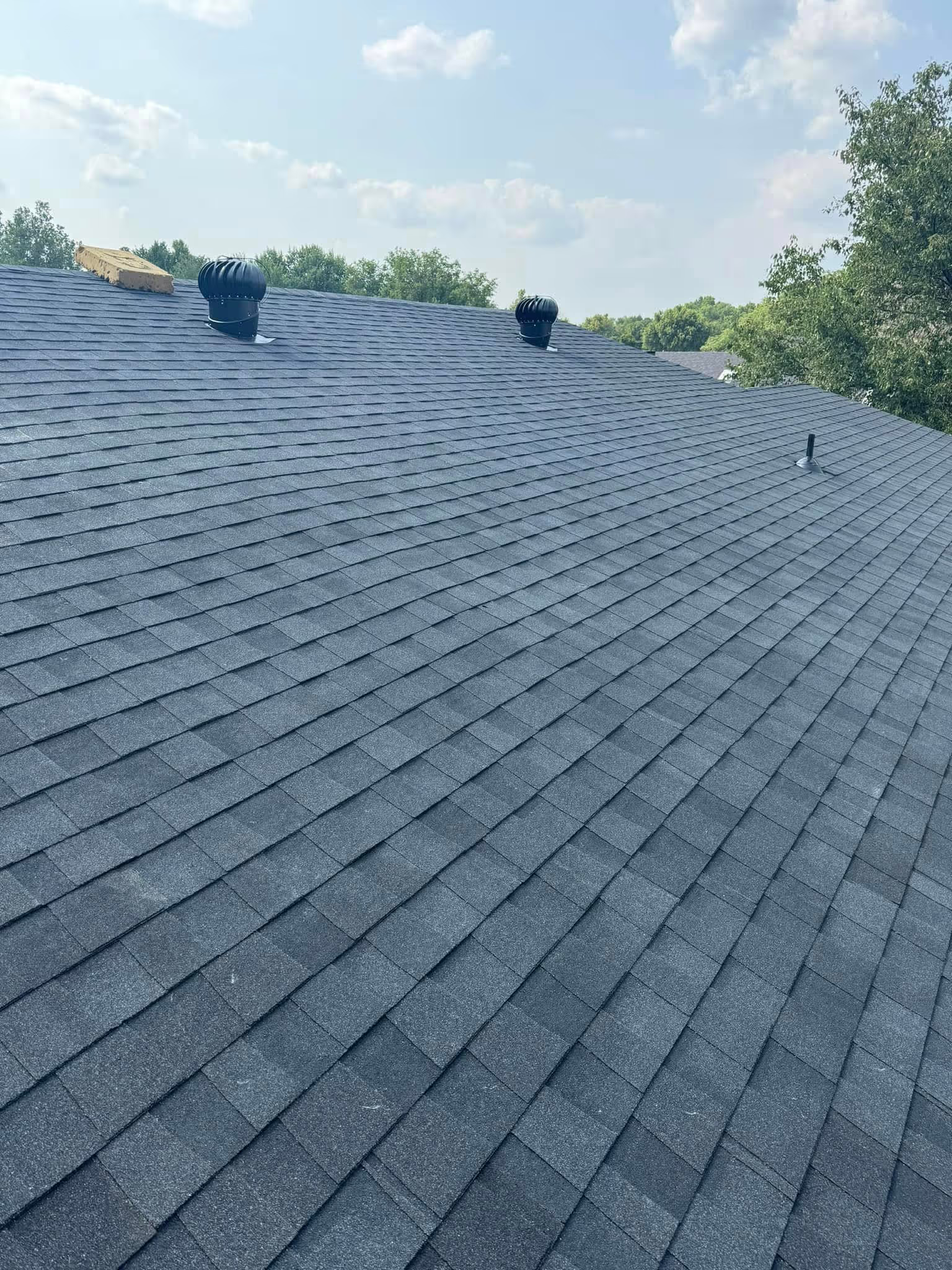
The downside is wind. A pitched roof catches more of it, which can lead to shingle blow-offs during straight-line wind events. On these buildings, fastening and edge details matter. Wind damage shows up as creased, torn or missing tabs, and those need attention before the next storm.
Maximizing the Lifespan of Flat Roofing Solutions for Businesses
If you choose a low-slope membrane, the material is your long-term financial hedge. TPO (thermoplastic polyolefin) is a common choice in Oklahoma because its white surface reflects summer UV and heat. Its seams are heat-welded into a continuous surface, unlike the taped or glued seams of many older EPDM rubber roofs.
The Role of Tapered Insulation and Drainage
An effective flat roof includes a tapered insulation plan. The insulation is cut to slope toward internal drains or scuppers, so water leaves the roof instead of sitting on it. Eliminating standing water protects the membrane from constant wetting and from the freeze-thaw cycles of an Oklahoma winter.
The Impact of Class 4 Standards on Commercial Durability
Whether you choose a flat membrane or a pitched system, impact resistance matters. Oklahoma recorded 216 major hail events of one inch or larger in 2025, eighth in the nation, according to Triple-I data from the Storm Prediction Center.
The ratings differ by system. Class 4 is the impact rating for shingles. For low-slope membranes, IBHS recommends at least an FM 4470 Class 1-SH rated assembly, with a high-density cover board and full adherence to remove the fastener plates where hail tends to fracture TPO. Specify the whole tested assembly, not just membrane thickness.
Some insurers credit impact-resistant roofs, but discounts are set by each carrier. Ask your agent whether a rated system lowers your premium and what documentation the carrier needs.
Integrating Roof Ventilation Solutions for Climate Control
A common misconception is that moisture doesn’t matter on a commercial roof. Buildings with industrial processes or dense occupancy generate humidity, and it has to go somewhere.
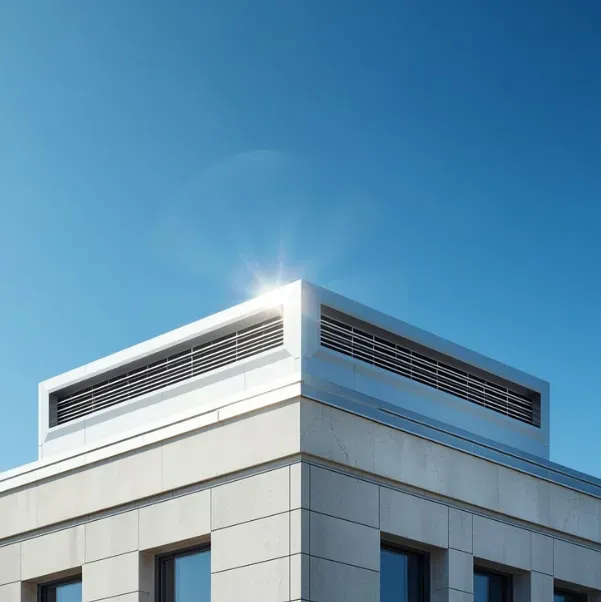
If your building traps humidity, it can lead to condensation between the roof deck and the membrane. That moisture wets insulation and can damage the deck over time. Managing it depends on the roof type: pitched roofs with attics need balanced ventilation, while low-slope assemblies rely on vapor control and the building’s HVAC design. Either way, the goal is to protect the deck and keep the insulation dry.
Navigating the Storm Damage Restoration Process
When a supercell hits your facility, the path to recovery involves more paperwork than most owners expect. Commercial claims differ from residential ones because they can involve business interruption coverage and cosmetic-damage endorsements, especially for metal roofs.
Hail on a low-slope roof often doesn’t leak right away. Documenting it takes a moisture survey confirmed with core cuts, not just photos. We document the damage, meet the carrier’s adjuster on the roof and submit supplements for line items in our estimate. The owner files and owns the claim, and disputed claims belong with a licensed public adjuster or coverage counsel. Wet insulation has to come out; coating over it is not a repair. Our commercial storm damage restoration page explains the process.
Maintenance and the “Stealth” Installation
The biggest pain point for any business owner is downtime. A roofing project that blocks loading docks or disturbs tenants is a failure of project management. Ask any contractor how crews and debris removal will be scheduled around your peak business hours.
Maintenance extends the life of any flat roof. Inspections twice a year, and after significant hail or wind, catch seam failures and clogged drains before they become emergency calls. When a roof is near the end of its life, options such as coating restoration or a recover can defer replacement, but only on a dry, sound roof. Building codes prohibit a recover when two or more roof coverings already exist. Our commercial roof retrofitting page covers those options.
Conclusion: Making the Strategic Choice for Your Property
Your roof is the most important part of your building’s envelope. Whether you choose a TPO flat system or a pitched metal roof, the quality of the engineering is what stands between you and the next storm.
Protect Your Property Today
Prodigy Restoration helps Oklahoma City business owners compare flat roofing solutions and pitched systems for their buildings. We’re BBB Accredited, offer free commercial roof inspections and answer calls 24/7. Call us at (405) 730-5672 or fill out our contact form.
Frequently asked questions
Is a flat roof or a pitched roof better for a commercial building in Oklahoma?
It depends on the building. Flat roofs make use of the roof for equipment and usually cost less to install, but they need a tapered insulation plan so water drains. Pitched roofs shed water by gravity but catch more wind. Drainage, wind exposure and maintenance plans should drive the choice.
What makes a flat roof hail resistant?
The whole assembly. IBHS recommends at least an FM 4470 Class 1-SH rated assembly with a high-density cover board and full adherence, which removes the fastener plates where hail tends to fracture TPO. Membrane thickness alone doesn't tell you how a roof will handle hail.
Can I put a new membrane over my old flat roof?
Sometimes. A recover can work on a dry, sound roof, but a moisture survey has to come first. Building codes prohibit a recover when the existing roof is water-soaked or deteriorated, or when two or more roof coverings already exist.
How often should a commercial flat roof be inspected?
Twice a year and after any significant hail or wind event. Hail damage on a low-slope roof often doesn't leak right away, and clogged drains or failed seams are easier and cheaper to fix when they're caught early.
Prodigy Restoration
7140 NW 112th St, Oklahoma City, OK 73162