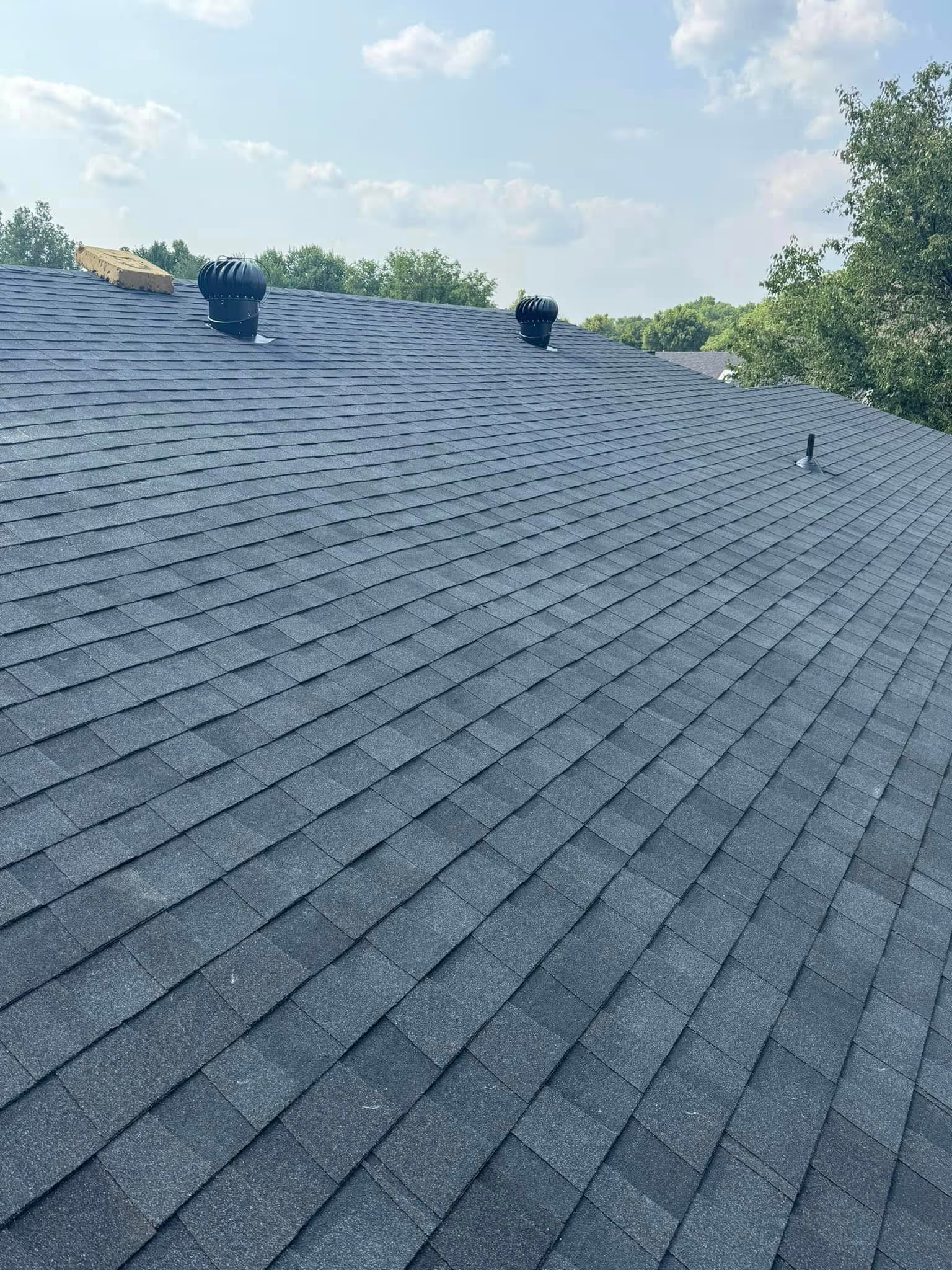
TL;DR: An attic roof leak in Oklahoma usually starts at a penetration, a wall or chimney, or the roof edge, not in the open field of shingles. Before anyone patches anything, check the insulation, the underside of the decking and every opening in the roof, and take dated photos. In Oklahoma City, the wet spot on the ceiling is rarely where the water got in.
An attic roof leak in Oklahoma is easier to fix when you know where to look, and the attic is the best place to look first. Water that shows up on a bedroom ceiling may have entered the roof several feet uphill, run along a rafter and soaked into the insulation before it ever reached the drywall. A short, careful trip into the attic can narrow the source down to one or two likely spots. This checklist covers what to inspect, what each sign usually means, and when it’s time for a roofer. If you already know you need help, our roof repair services page explains how we handle it.
Is It Really an Attic Roof Leak?
Not every wet attic has a roof problem. Before you blame the shingles, rule out the two common impostors: condensation and household plumbing or ductwork.
Condensation forms when warm, moist air from the house meets a cold roof deck. It tends to show up as frost or droplets spread evenly across the underside of the decking, often on cold mornings, with no connection to rain. A roof leak usually shows up in one area, gets worse during or right after a storm, and leaves a stain that runs downhill. Bathroom fans that vent into the attic instead of outside are a frequent cause of condensation.
Plumbing, water heater lines and air conditioning equipment in the attic can also drip. If the wet spot sits right under a pipe or an HVAC unit and appears on dry days, check those first.
7 Things to Check in the Attic
Bring a good flashlight and your phone for photos. Step only on the joists or on boards laid across them, because the ceiling drywall between them won’t hold your weight. Go on a dry day for a calm first look, then again during or after a rain if you can do it safely.
1. Wet Attic Insulation
Wet attic insulation is often the first clue, and it marks the drip point, not the entry point. Look for matted, darker or compressed areas in the insulation, and press lightly with a gloved hand to feel for dampness. Note where the wet patch sits, then look straight up and uphill from it. Wet insulation loses much of its value and can hold moisture against the drywall, so plan to replace it once the leak is fixed.
2. Stains on the Underside of the Decking
Dark rings or streaks on the decking show the path water has taken. Follow any stain uphill along the rafters toward the ridge, since water travels along wood before it drips. The highest point of the stain is usually closest to the real entry. Soft or crumbly decking means the leak has been active for a while.
3. Pipe Vents and Other Penetrations
Plumbing vents are one of the most common leak points on otherwise healthy roofs. Look at the wood around each vent pipe, exhaust fan duct and flue where it passes through the deck. A stain ringing a pipe usually points to a cracked rubber pipe boot outside. Pipe boots and flashing typically fail before the field shingles do.
4. Walls, Chimneys and Skylights
Water that runs down a wall or framing near a chimney points to flashing. Check where the roof meets a second-story wall, around the chimney chase and around any skylight shaft. Step flashing, counter flashing and skylight flashing can rust, separate or loosen. The repair is new flashing, not sealant over the old metal.
5. Nail Tips and Daylight
Look for rusty nail tips, drips hanging from nails and pinholes of daylight. A single rusty or wet nail can mean a nail pop above it, where the fastener has backed out and lifted the shingle. Many frosted or wet nails spread across the whole deck point back to condensation instead. Daylight around a vent or along the ridge isn’t always a leak, but daylight through the open deck is.
6. Valleys and Eaves
Valleys and the low edge of the roof collect the most water. Check the decking under each valley, where two roof planes meet, and along the eaves above the exterior walls. Leaves and debris slow water down in valleys, and clogged gutters can push it back under the first course of shingles. In winter, ice at the eaves can back water up the same way.
7. Ventilation
Poor attic ventilation doesn’t cause a leak directly, but it shortens the roof’s life. Check that soffit vents at the eaves aren’t buried under insulation and that the ridge or roof vents are clear. In this climate, UV and heat combined with weak intake and exhaust speed up curling and cracking, especially on south and west slopes. A shingle that cracks early eventually leaks.
What to Do If You Find These Signs
Start by protecting the inside of the house. Put a bucket under any active drip, move belongings, and if the ceiling drywall is bulging with water, keep people out of the room below it. Take dated photos and short videos of every stain, wet spot and nail you found, with something in the frame for scale.
Then think about timing. If the leak started the night of a hail or wind storm, get the roof inspected before you decide anything else, because damage spread across several slopes is often a claim question rather than a patch. Wear and aging aren’t covered perils, so a slow leak from an old pipe boot is usually a maintenance repair.
If water is coming in and the roof is open, the first step is covering it. We provide emergency tarping and dry-in, and our post on emergency roof repair options walks through that first stretch. For a full list of what usually fails on metro roofs, see our guide to common roof leaks.
What an Attic Leak Means for Oklahoma Homes
Oklahoma weather is hard on the spots this checklist covers. Parts of the state see roughly 60 to 65 days a year at 90°F or hotter, plus dozens of freezing days, so rubber boots, sealants and flashing take a beating. In practice, the metro’s hail season runs from March through October, and winter brings ice. The historic October 2020 ice storm coated the metro in ice and brought limbs down onto roofs and gutters across the area.
Searches for roof repair in the OKC metro peak in January and February, the winter leak and ice months. That’s when a small summer failure finally shows up as a ceiling stain.
The age of the house matters too. Attic ventilation in 1950s and 1960s homes, common in Midwest City and Del City, is often undersized. Older Bethany roofs may sit on plank or skip sheathing. Those attics deserve a closer look at the decking and the vents.
Permit rules for repairs vary by city. Oklahoma City exempts roof maintenance of 500 square feet or less from its reroof permit, and Edmond doesn’t require a permit for roof coverings. Midwest City requires a $50 permit even for repairs, which our Midwest City roof repair page covers.
Get a Free Attic Roof Leak Inspection in Oklahoma City
If your attic check turned up stains, wet insulation or rusty nails, we’ll inspect the roof, trace the attic roof leak to its source and give you photo documentation you can keep. Prodigy Restoration is BBB Accredited, an Owens Corning Preferred Contractor, and our inspections are free. We answer calls 24/7 anywhere in the Oklahoma City metro. Call us at (405) 730-5672 or fill out our contact form.
Frequently asked questions
How do I find the source of a roof leak?
Start in the attic on a dry day with a flashlight. Find the wet insulation or stain, then follow the stain uphill along the rafters, since water travels before it drips. Check pipe vents, chimneys, walls, valleys and nails near that path. The highest point of the stain is usually closest to where water gets in.
Is a wet attic always a roof leak?
No. Condensation from warm, moist house air meeting a cold roof deck can wet the decking and nails across the whole attic, often on cold mornings with no rain. Bathroom fans venting into the attic make it worse. Plumbing and air conditioning lines can drip too. A roof leak usually sits in one area and gets worse with rain.
Should I replace wet attic insulation?
Usually, yes, once the leak is fixed. Wet insulation mats down, insulates poorly and can hold moisture against the ceiling drywall and framing. A small area that dries completely may recover, but insulation that stays compressed or stained should come out. Fix the roof first, or the new insulation will get wet the same way.
What does a water stain on the ceiling mean for my roof?
A ceiling stain means water has already soaked through the attic insulation to the drywall, so the leak has likely been active for a while. The stain is the drip point, not the entry point. Check the attic above it and uphill from it, and photograph what you find before anyone starts patching.
Does homeowners insurance cover an attic roof leak?
It depends on the cause and your policy. Wear and aging aren't covered perils, so a leak from an old cracked pipe boot is usually a maintenance repair. A leak that started right after a hail or wind storm may be a claim question, so have the roof inspected and documented before you decide whether to file.
Prodigy Restoration
7140 NW 112th St, Oklahoma City, OK 73162